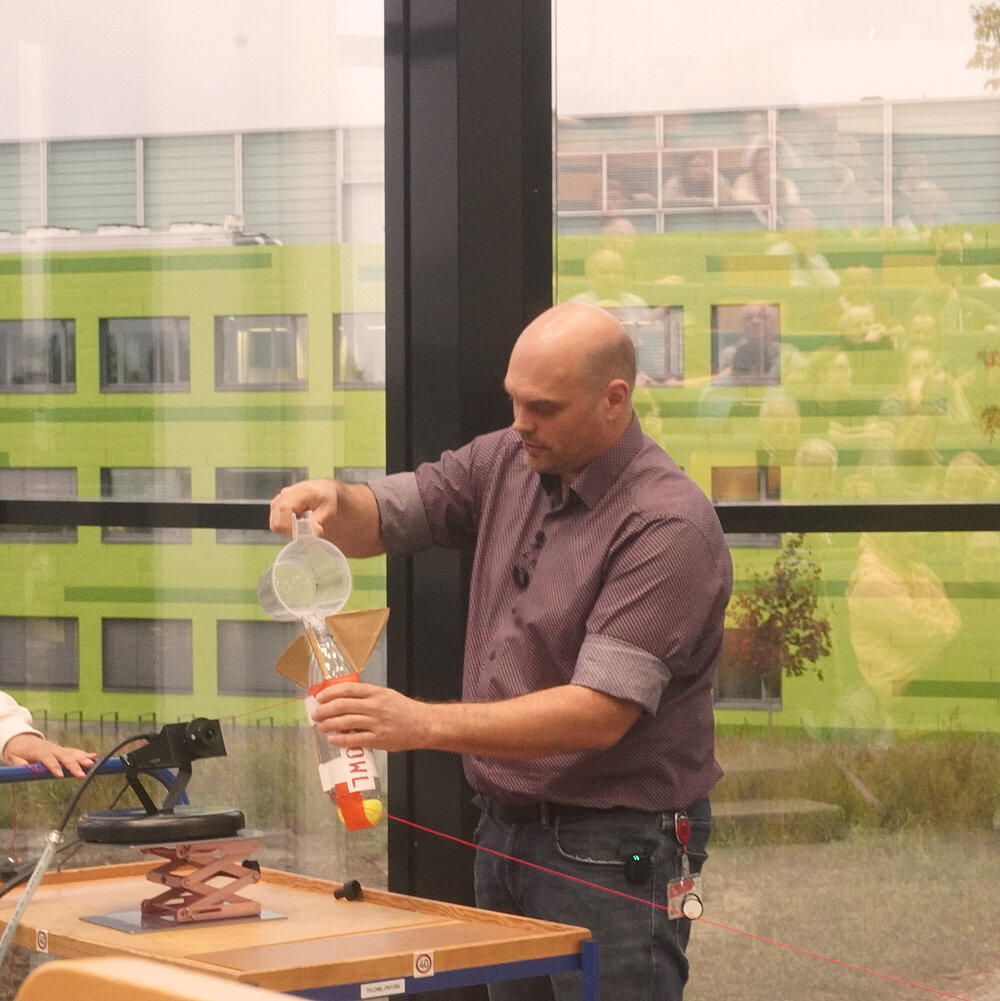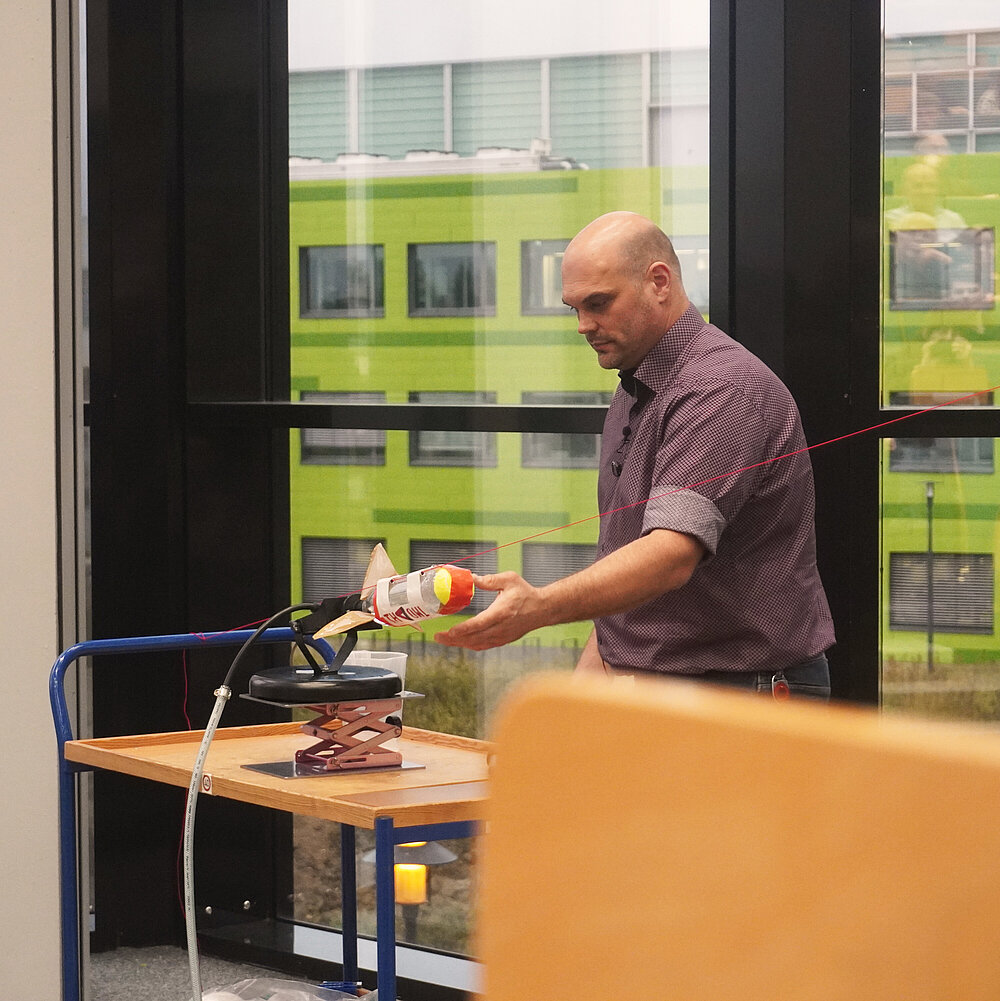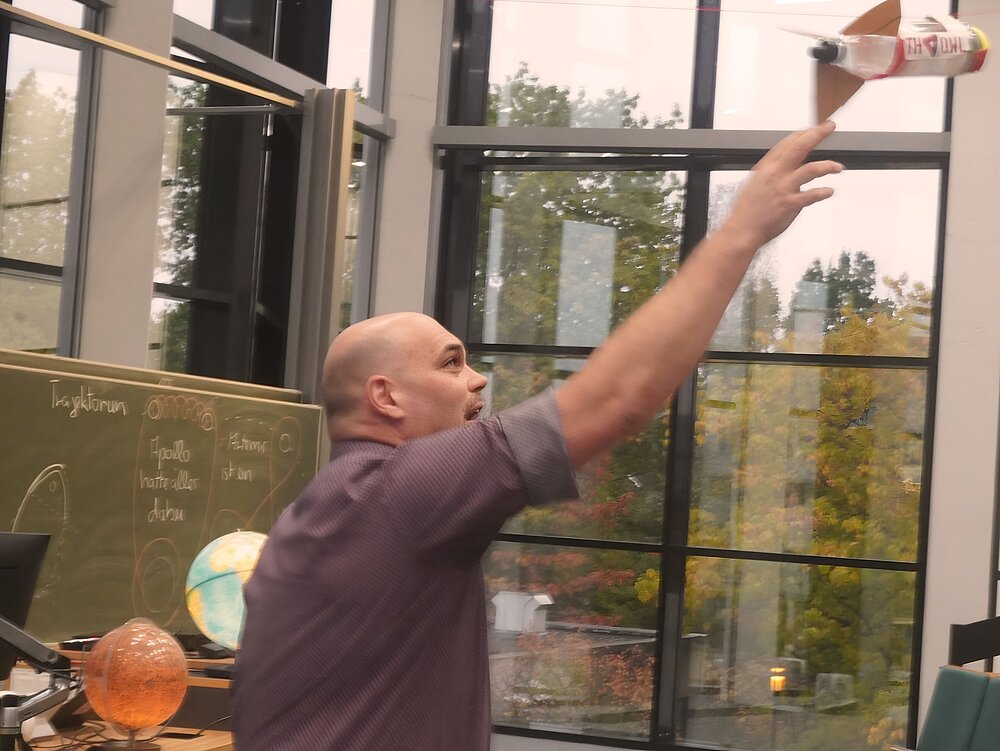
In the packed Audimax, Professor Dr. Johannes Üpping began by explaining how rockets work. He demonstrated how the fundamental principles of physics can be applied in practice using a small model he had built himself, which shot across the lecture hall with the help of water and pressure.
The lecture focused on a comparison between the historic Apollo missions and the modern Artemis program. It covered both the technical advances of the past decades and future plans for a potential lunar colony and a space station in lunar orbit. It became clear just how important the Moon could be for further space exploration, including as a launchpad for future missions to more distant destinations.
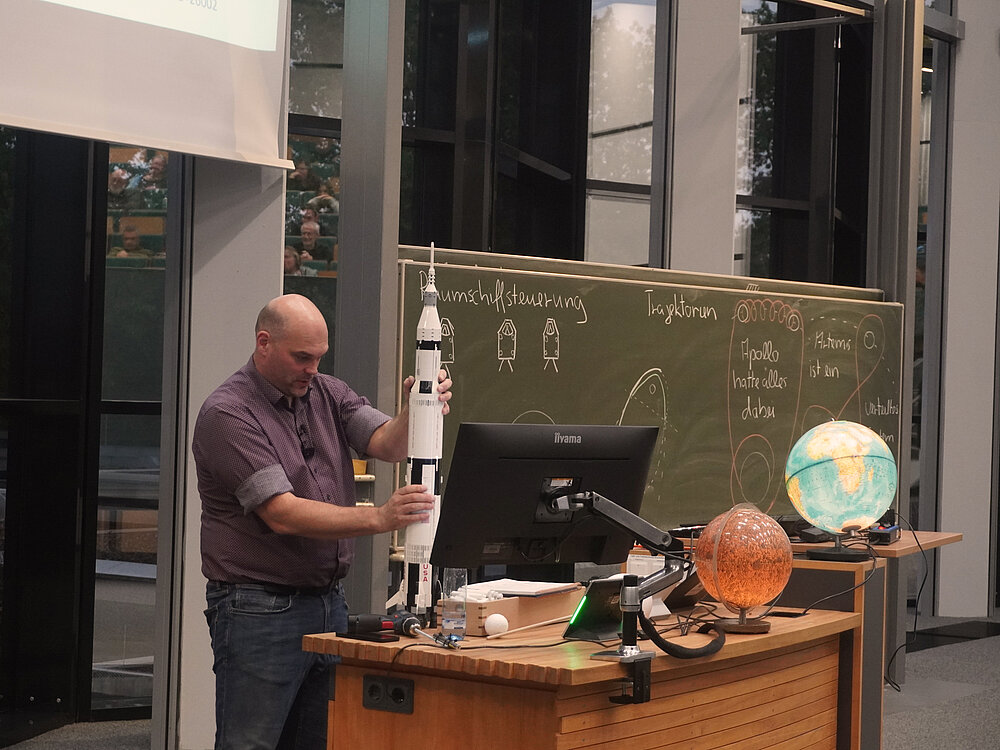
Using illustrative experiments, LEGO rockets, and cordless screwdrivers, Professor Üpping explained the complex interrelationships of space travel in an accessible and entertaining way. This allowed the audience not only to learn about the scientific background but also to experience it in a hands-on way. For Üpping, the fact that fascination with space extends far beyond technical questions is a key aspect of his work: “Astronomy holds a special fascination for people because it can challenge our own perspective in so many ways, leaving us in awe and, at the same time, filled with awe and wonder. It also produces breathtaking images and incredible scientific discoveries. It’s wonderful to be able to introduce listeners to this science.”
Next Tuesday, October 27, at 5:30 p.m., the lecture series continues in the Audimax at TH OWL on the Innovation Campus in Lemgo. The second event will focus on comets and asteroids, as well as the celestial mechanics that determine their orbits. Participants will learn how these two celestial bodies differ, what dangers they may pose to Earth, and what options exist for deflecting potentially hazardous objects.
The lecture series is organized by the observatory team led by Professor Johannes Üpping and is open to anyone interested in astronomy and the exploration of the universe. No prior knowledge is required.
More information about the lecture series is available here.