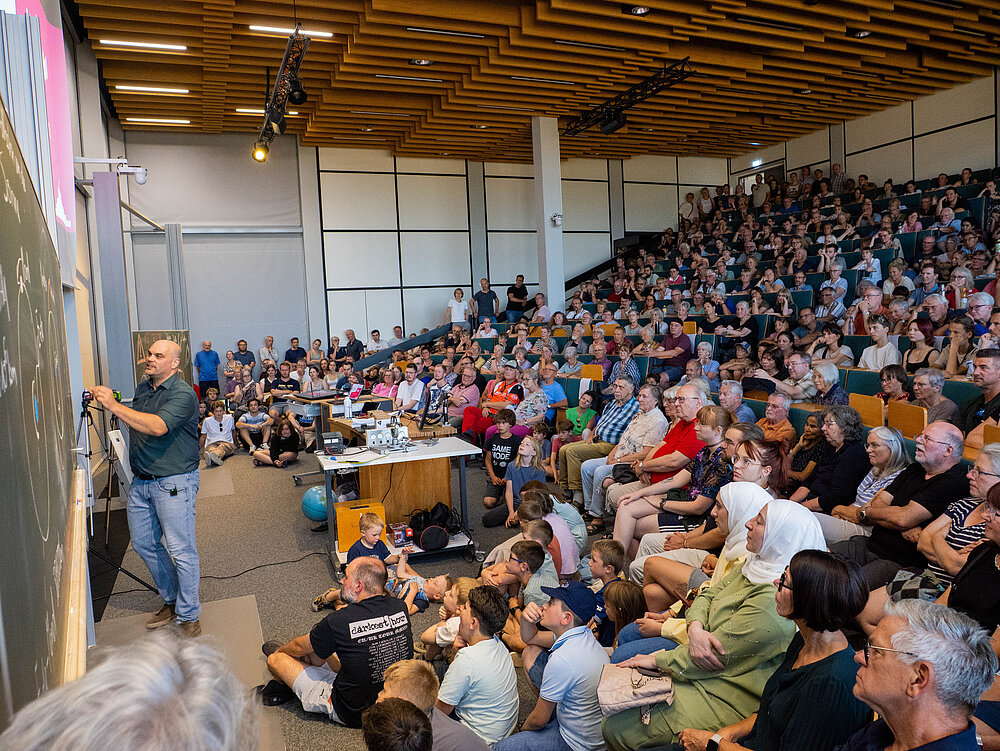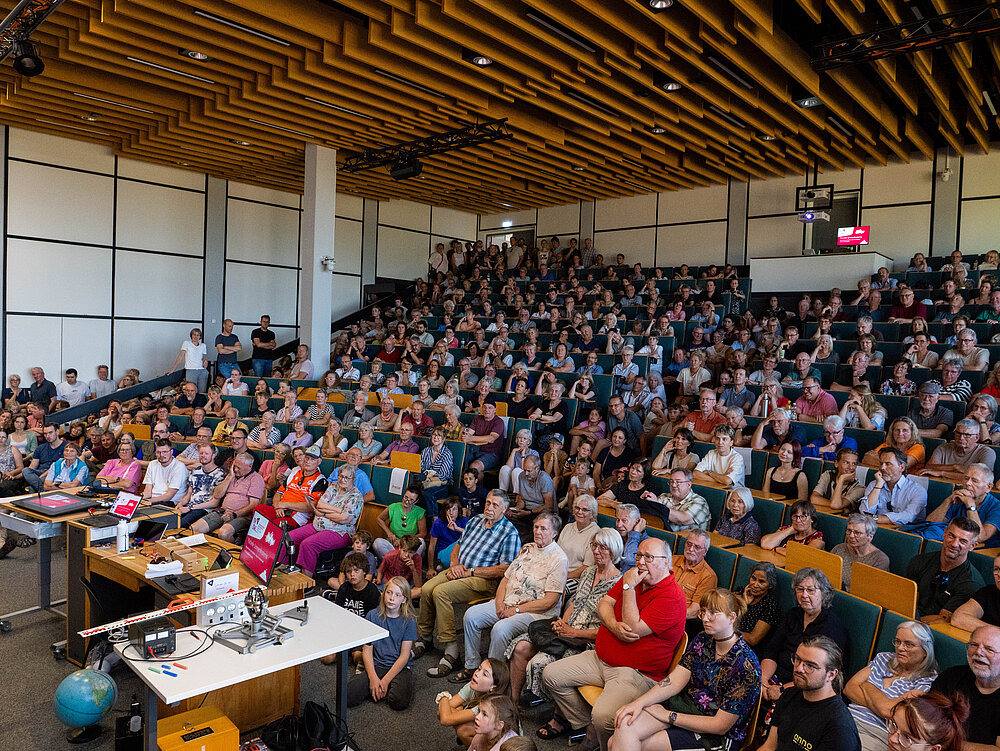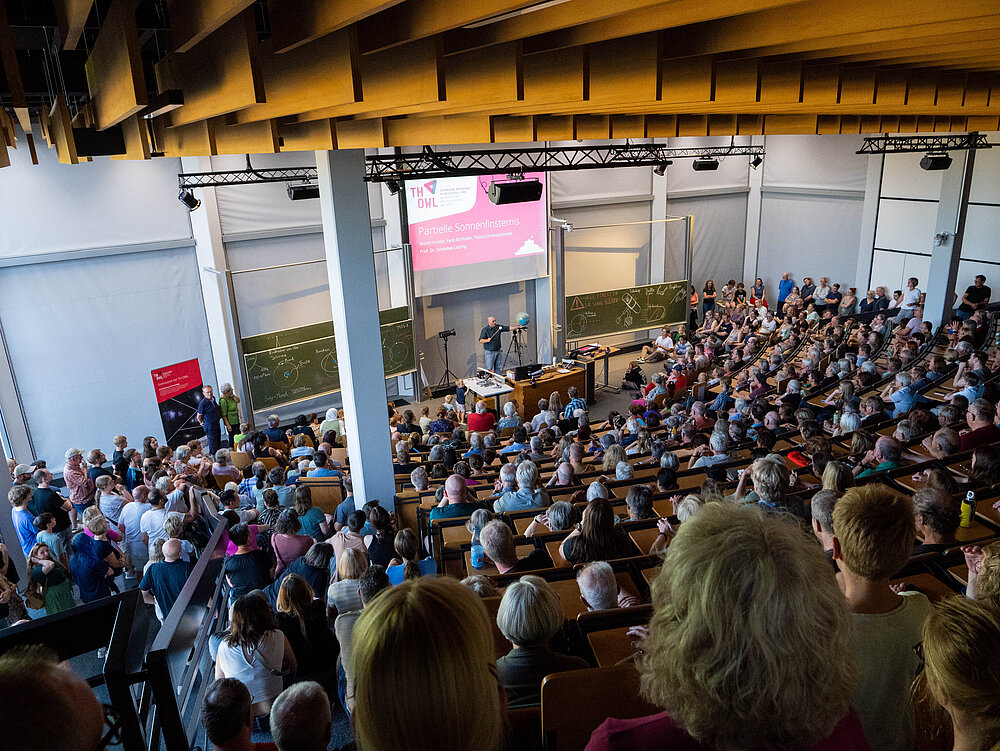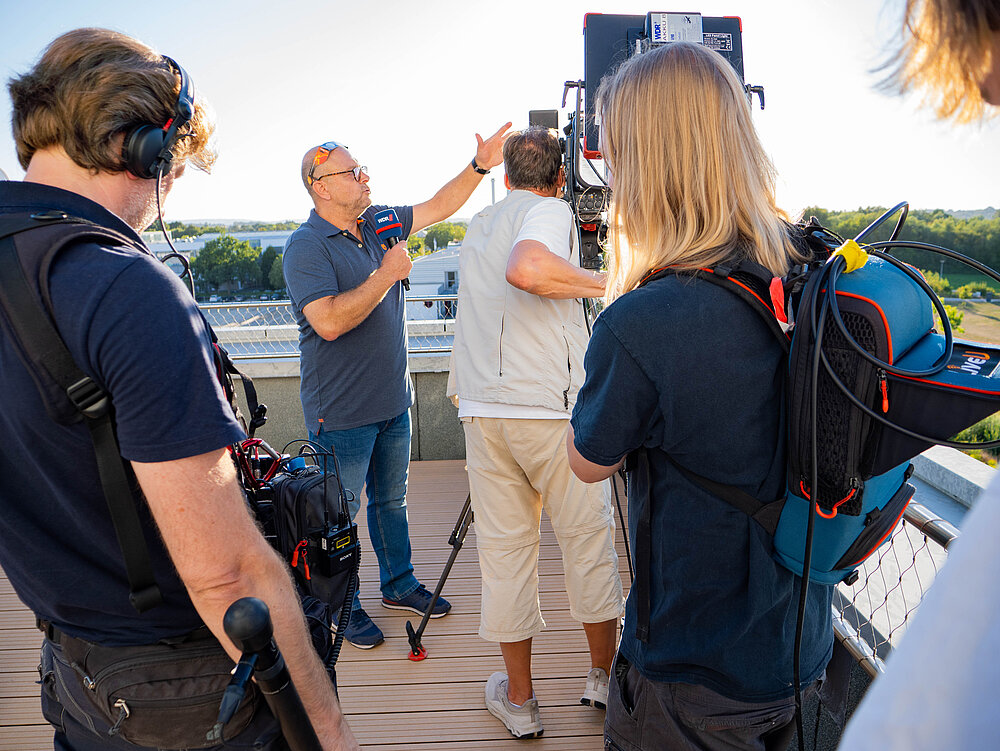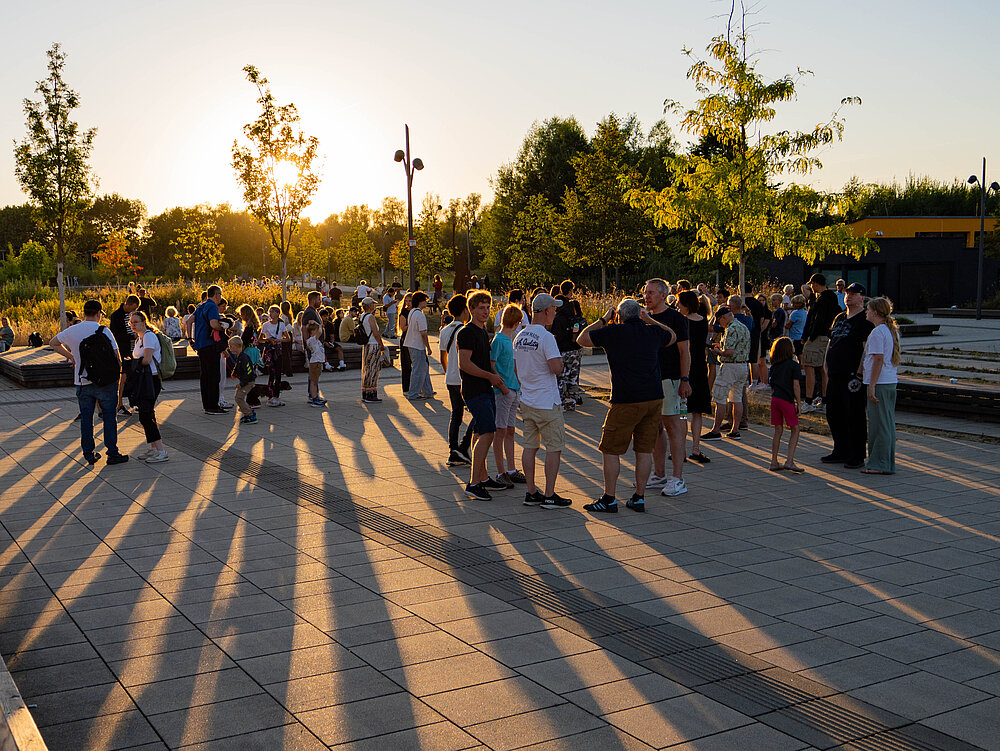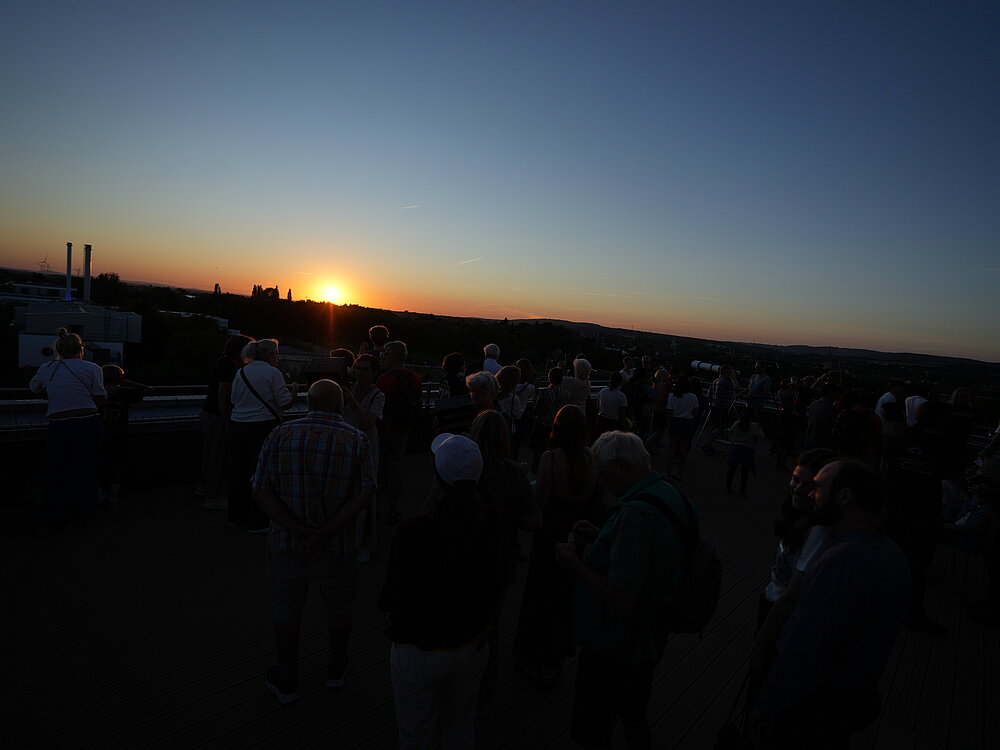
Professor Johannes Üpping of the Department of Physics and Energy Technology hadn’t expected such a large turnout. By late afternoon, the Innovation Campus in Lemgo was already filling up with numerous visitors. When the Auditorium Maximum—the largest lecture hall at the Ostwestfalen-Lippe University of Applied Sciences (TH OWL)—opened its doors at 5 p.m., the stream of visitors showed no sign of letting up. Guests from Lemgo and the surrounding region, young and old alike, had gathered on Wednesday, August 12, 2026, at the invitation of TH OWL and the Dr. Waldemar Reinecke Observatory to first attend an experimental lecture and then observe the partial solar eclipse together.
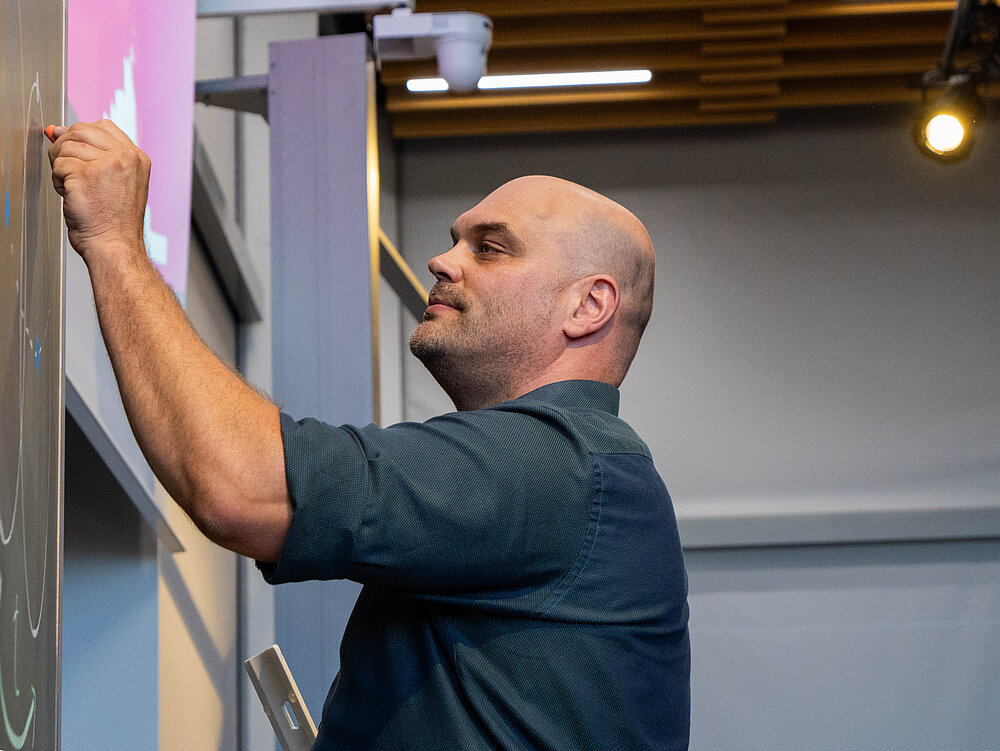
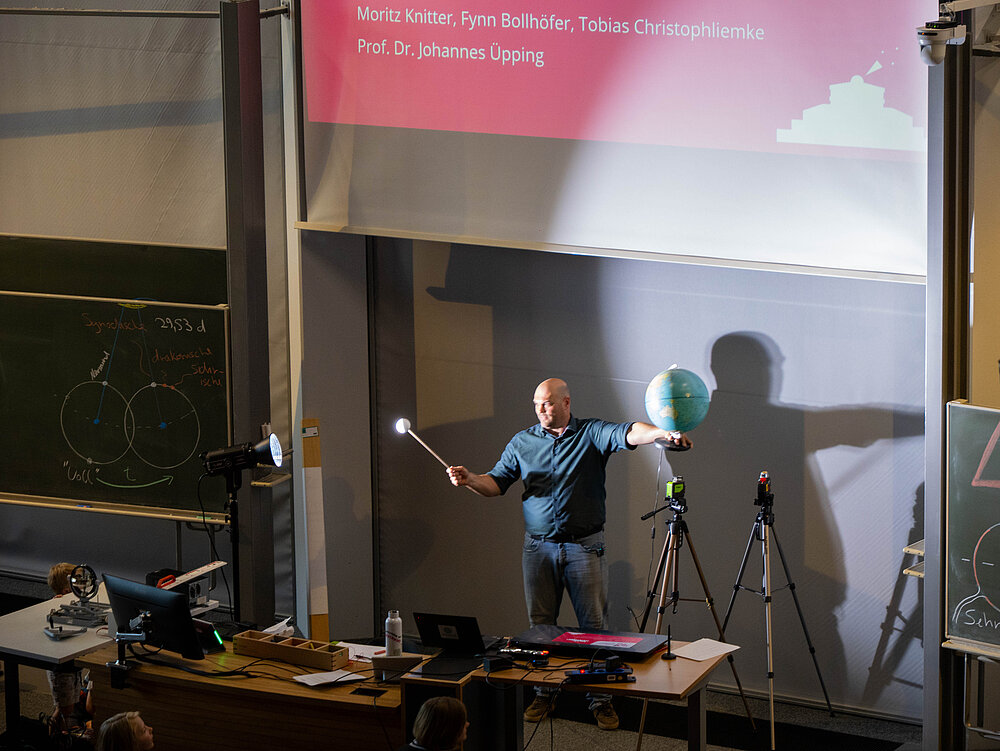
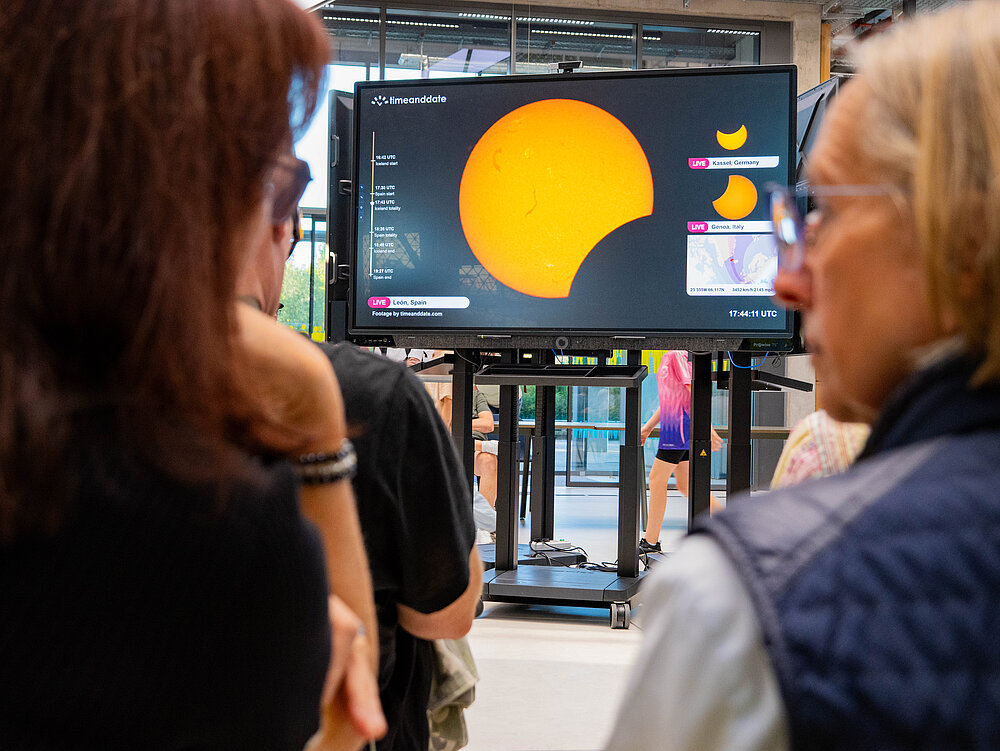
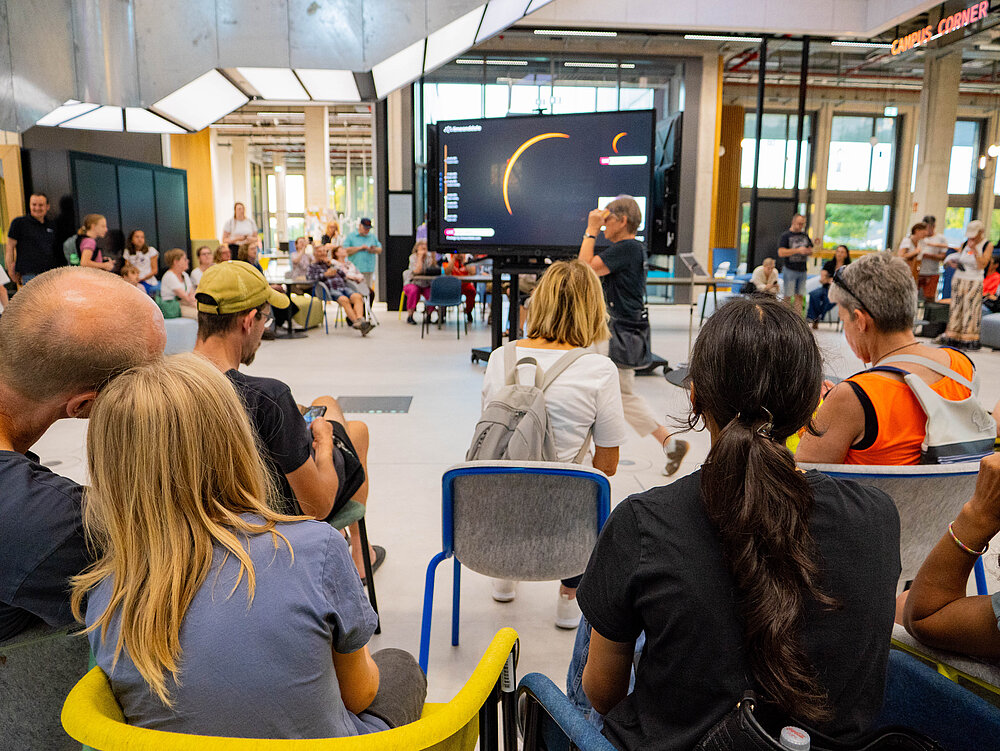
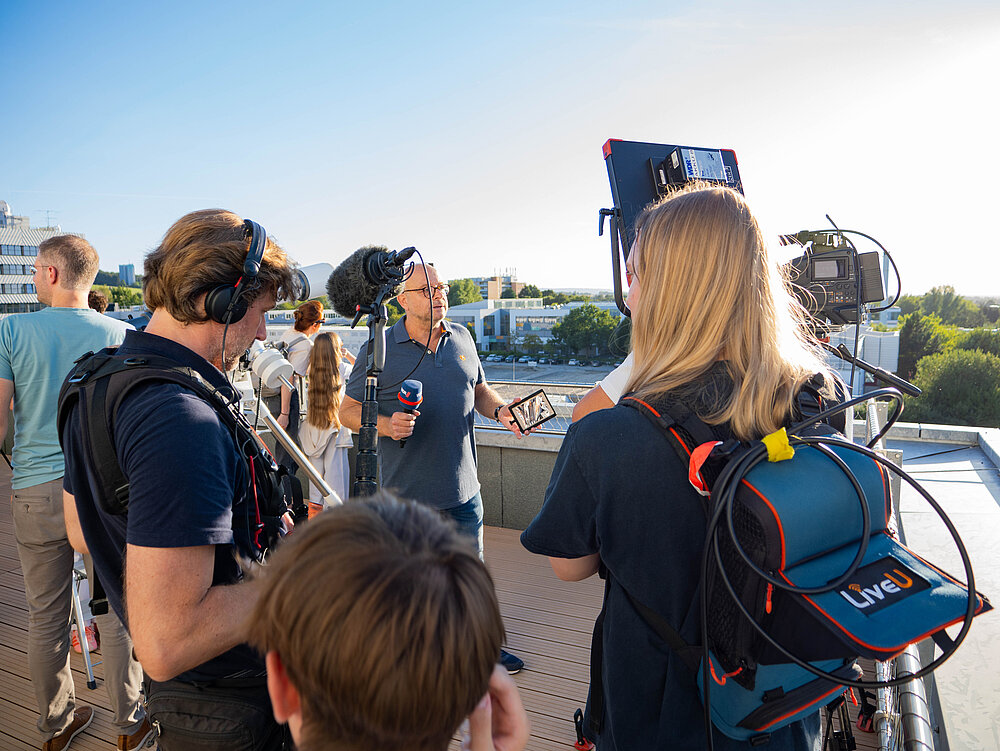
Professor Üpping, who is one of the observatory’s directors, explained the rare celestial event in a vivid and accessible way, using numerous hands-on experiments. The focus was on the partial solar eclipse, during which the Moon covered a maximum of about 89 percent of the Sun’s disk in Lemgo. The maximum was reached around 8:10 p.m.; the eclipse began in Lemgo at 7:16 p.m. and ended around 8:54 p.m.
The combination of scientific explanation and practical demonstration was particularly impressive. Using Styrofoam balls, beams of light, video clips, animations, and blackboard diagrams, Üpping showed how the Sun, Moon, and Earth are positioned relative to one another and how the Moon casts its shadow onto the Earth during a solar eclipse. He also clearly explained why looking directly at the sun is dangerous for the eyes and why only appropriate sun protection should be used.
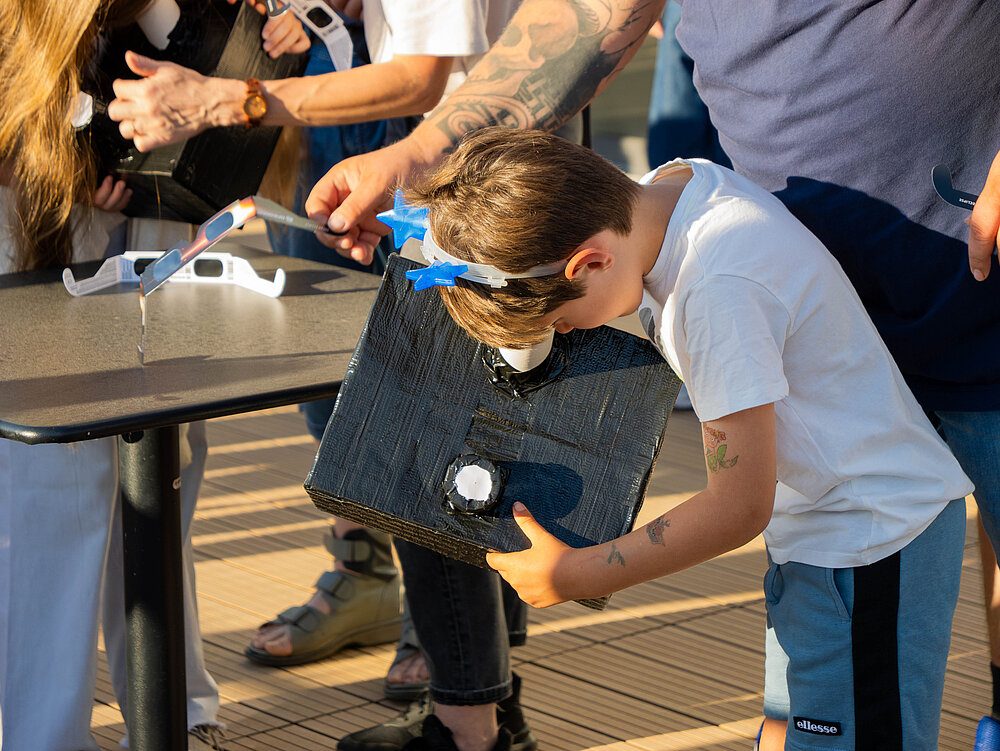
“That was really cool—especially when we saw the Moon pass in front of the Sun,” said one of the children, describing the demonstration with the Styrofoam ball.
The mix of science and entertainment was also well-received by the adult visitors. “I wouldn’t have thought that astronomy could be explained so clearly. You suddenly understand what’s actually happening up there,” one visitor praised the professor after the lecture.
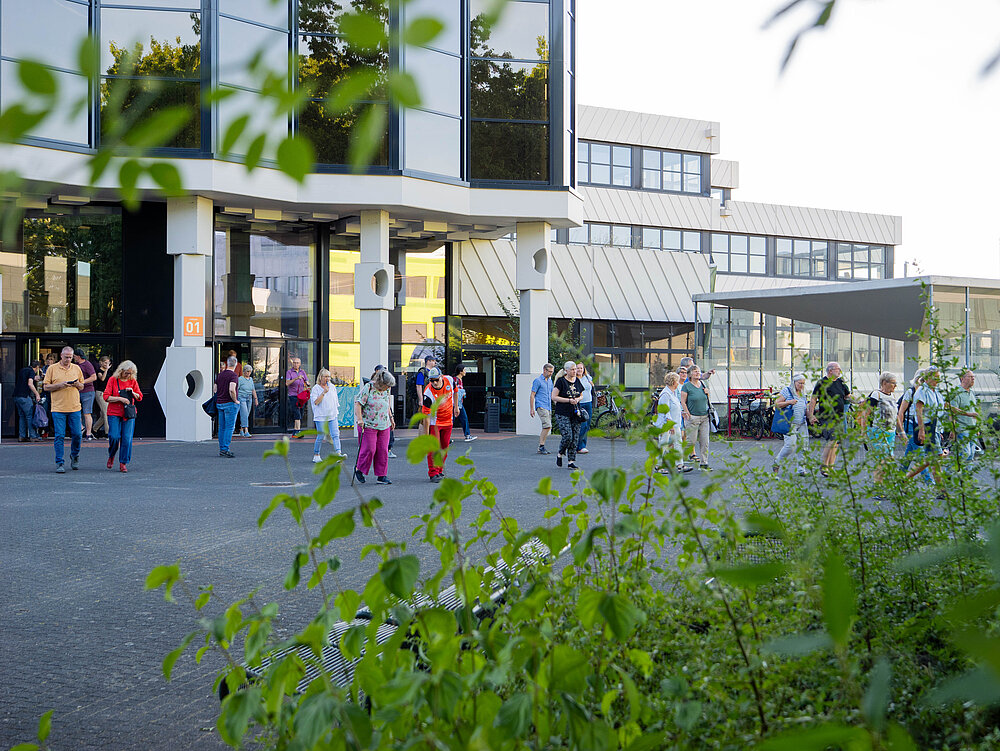
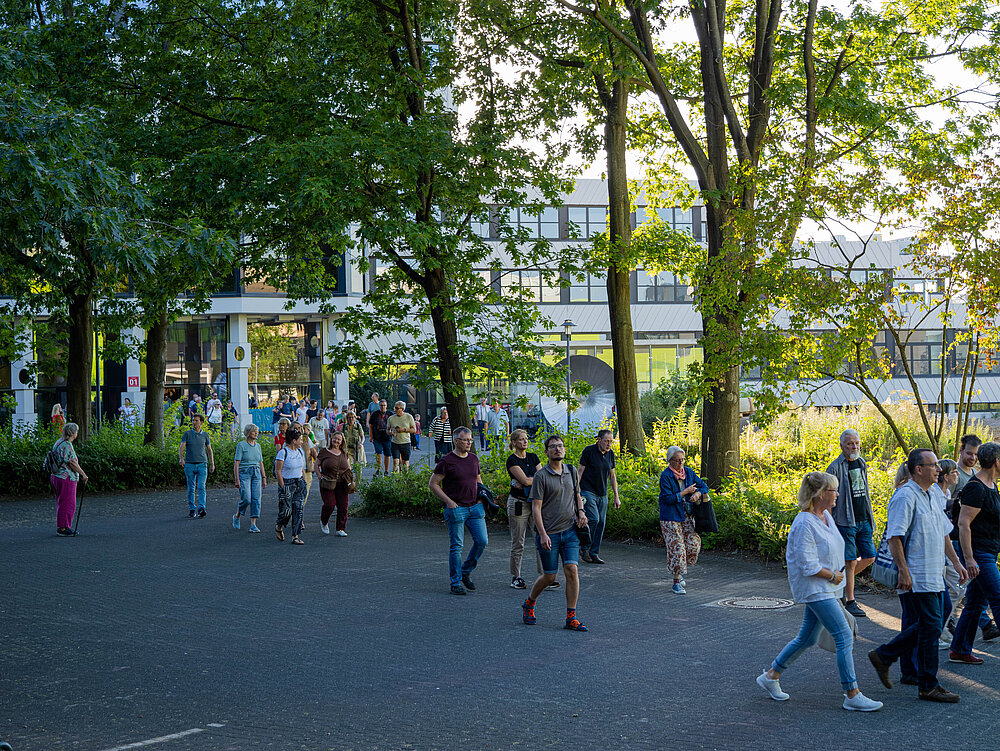
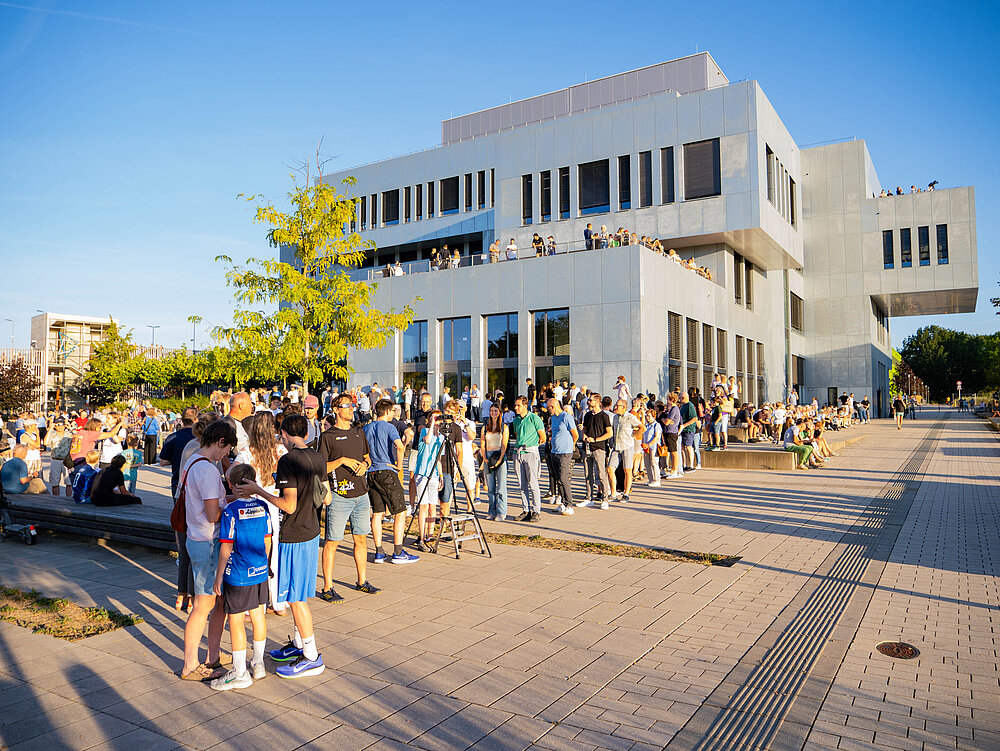
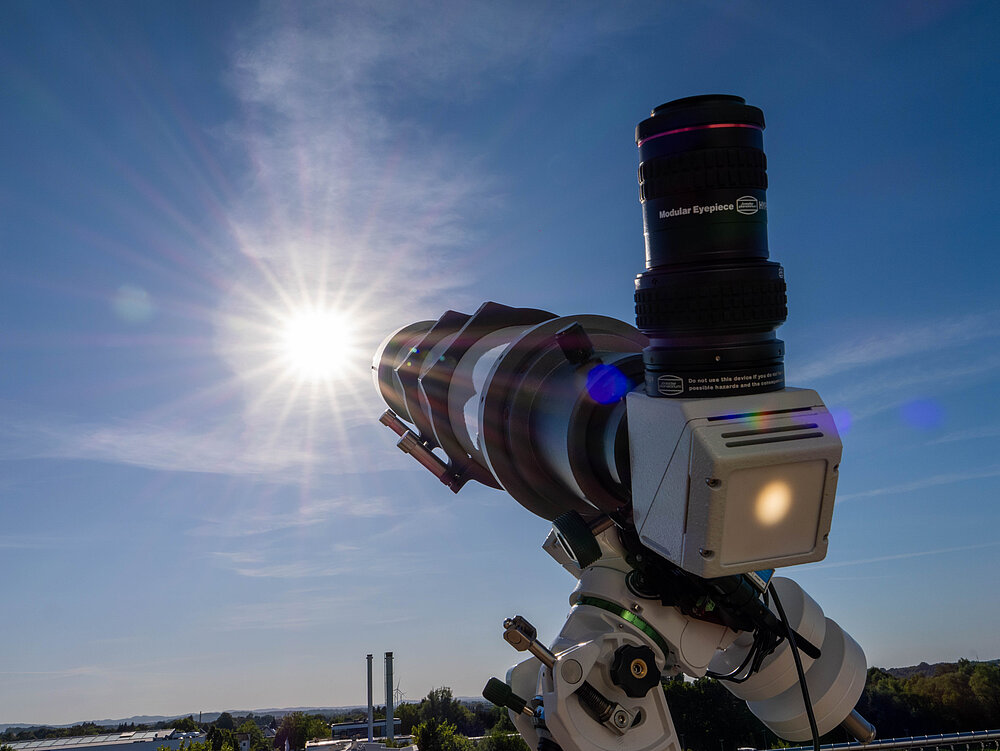
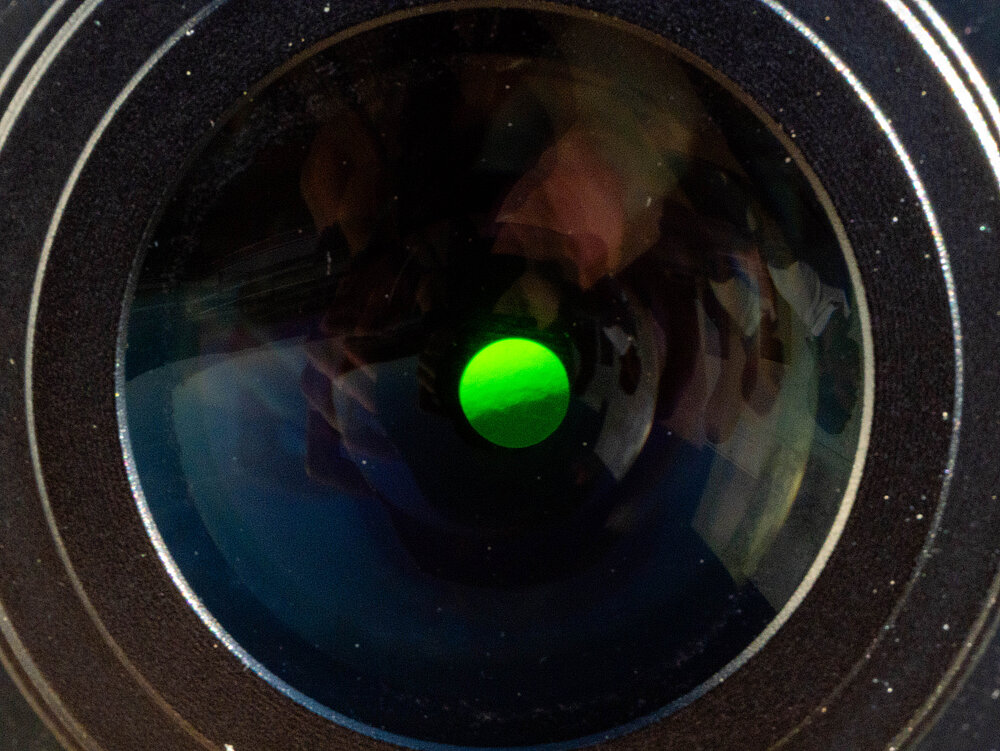
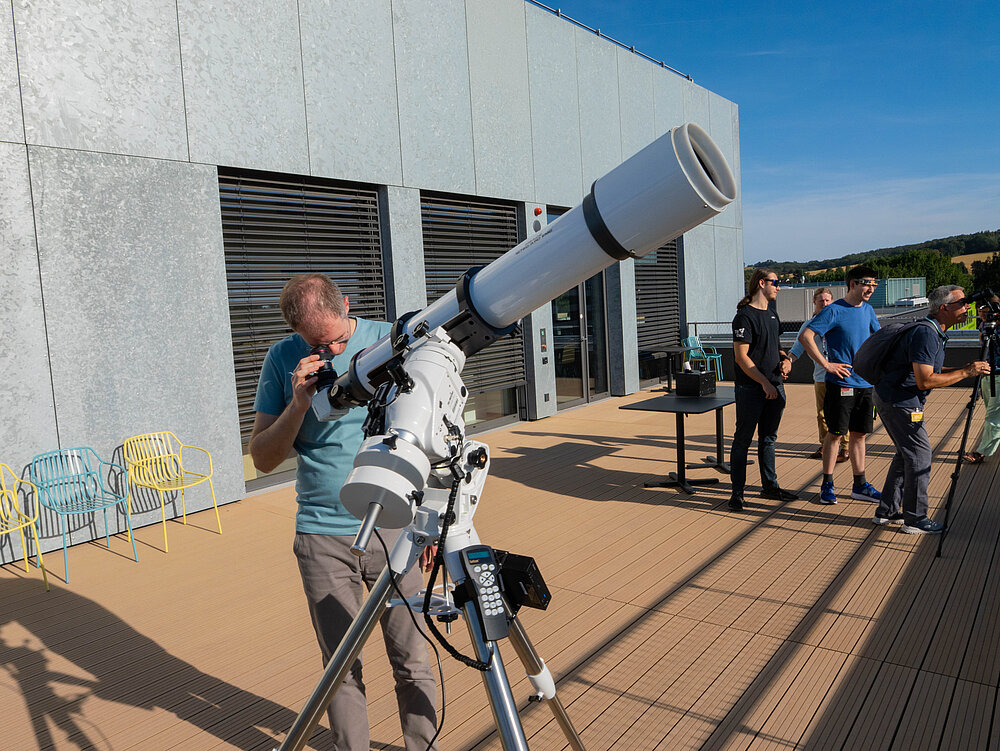
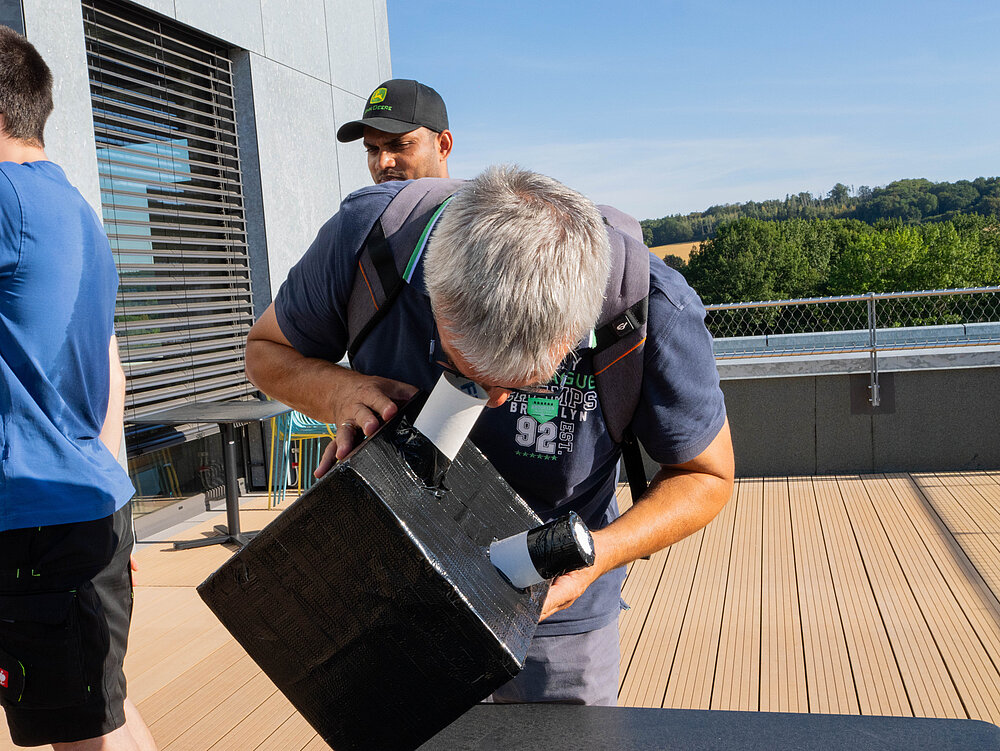
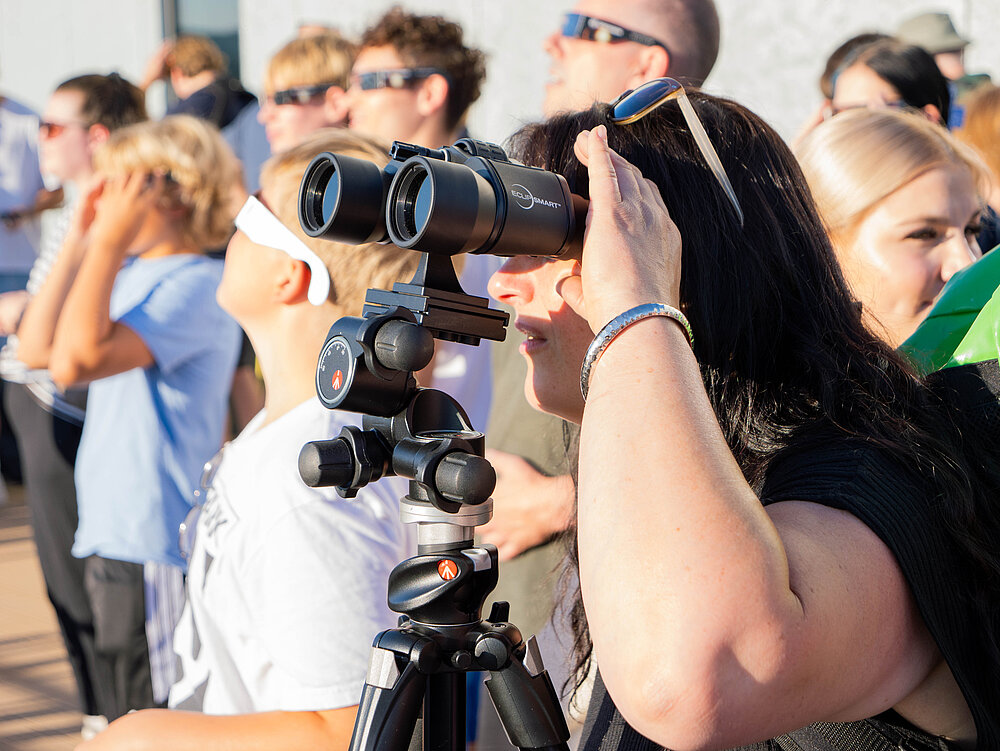
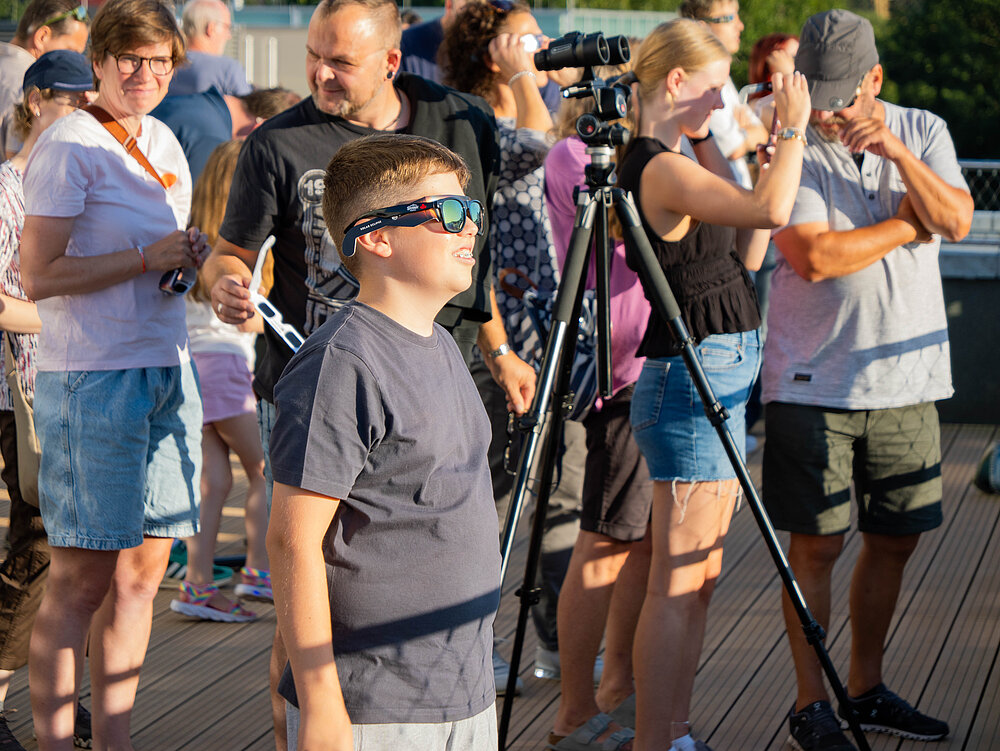
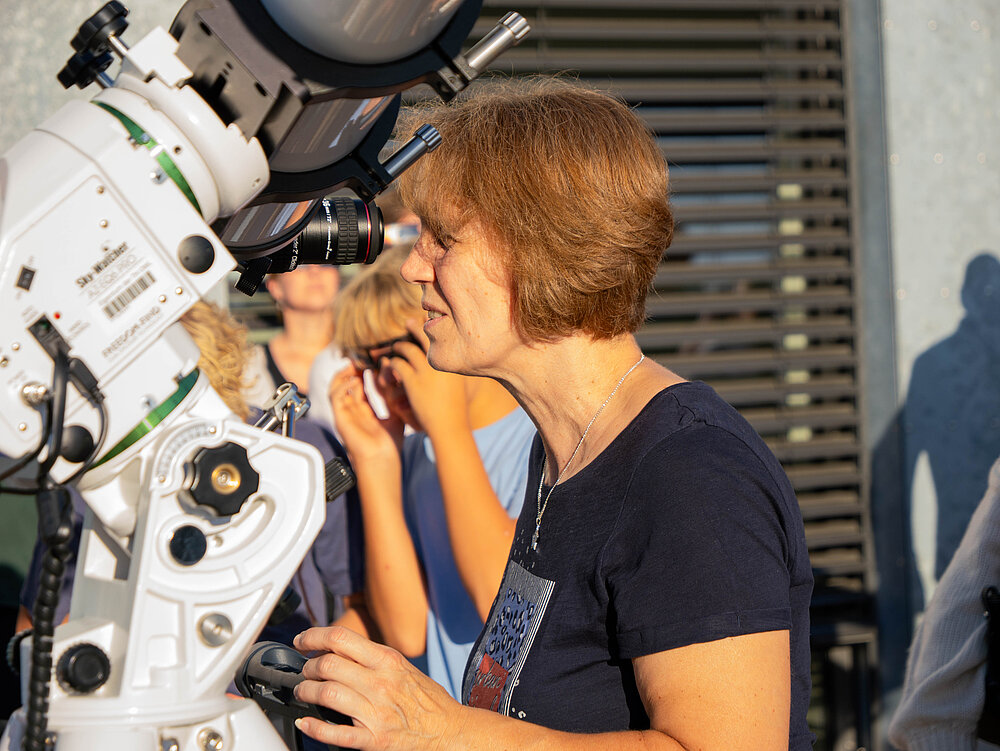
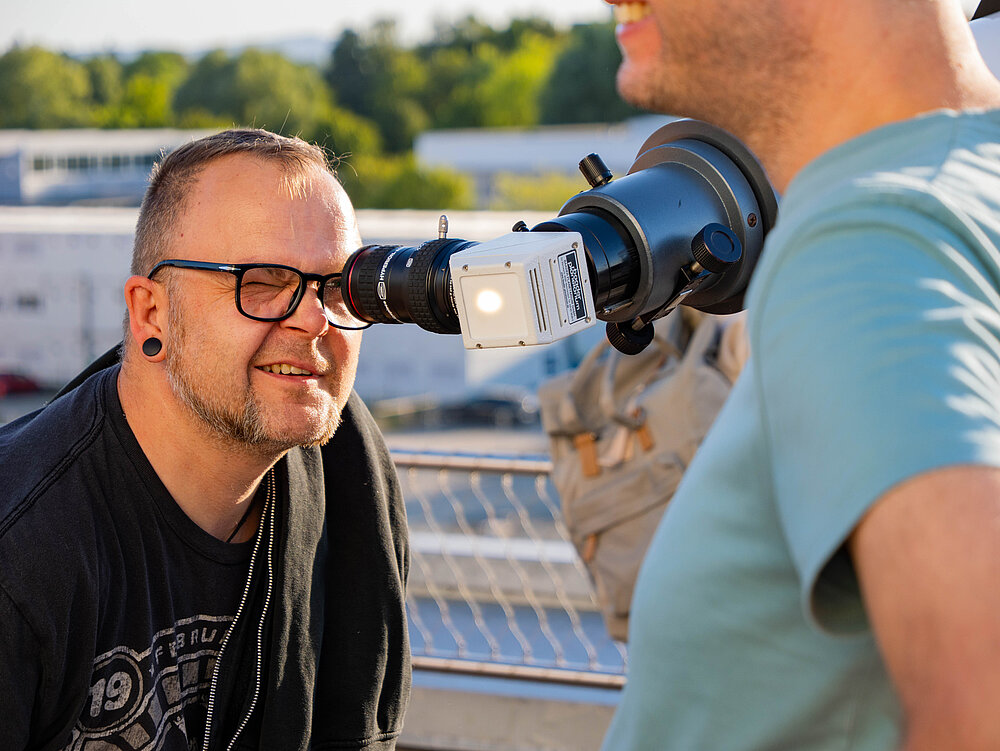
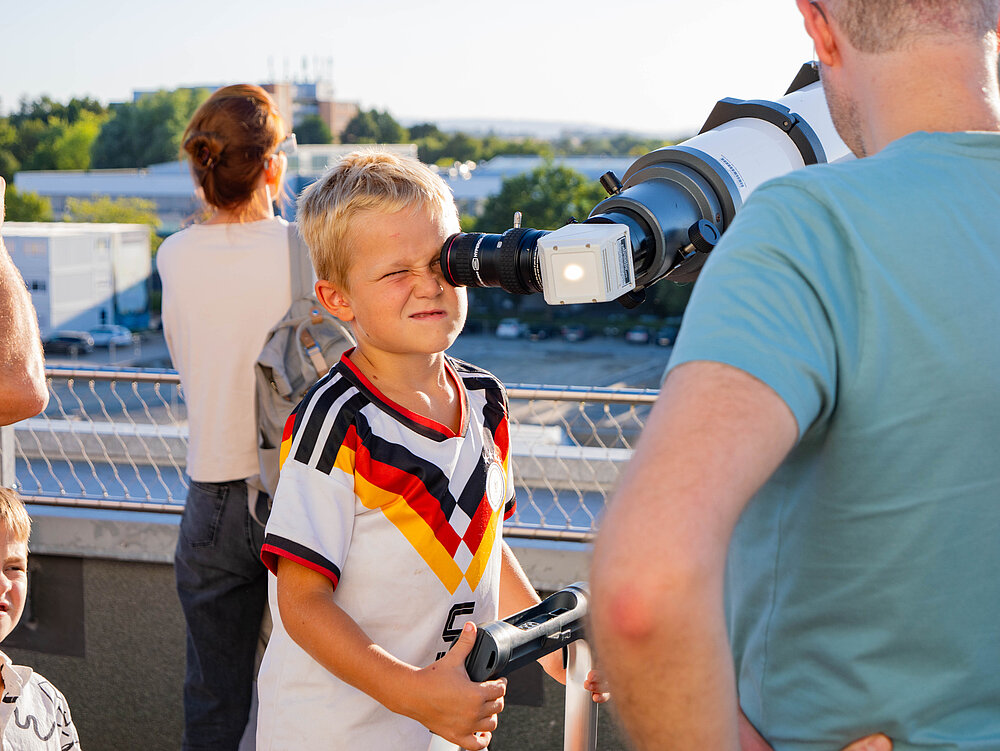
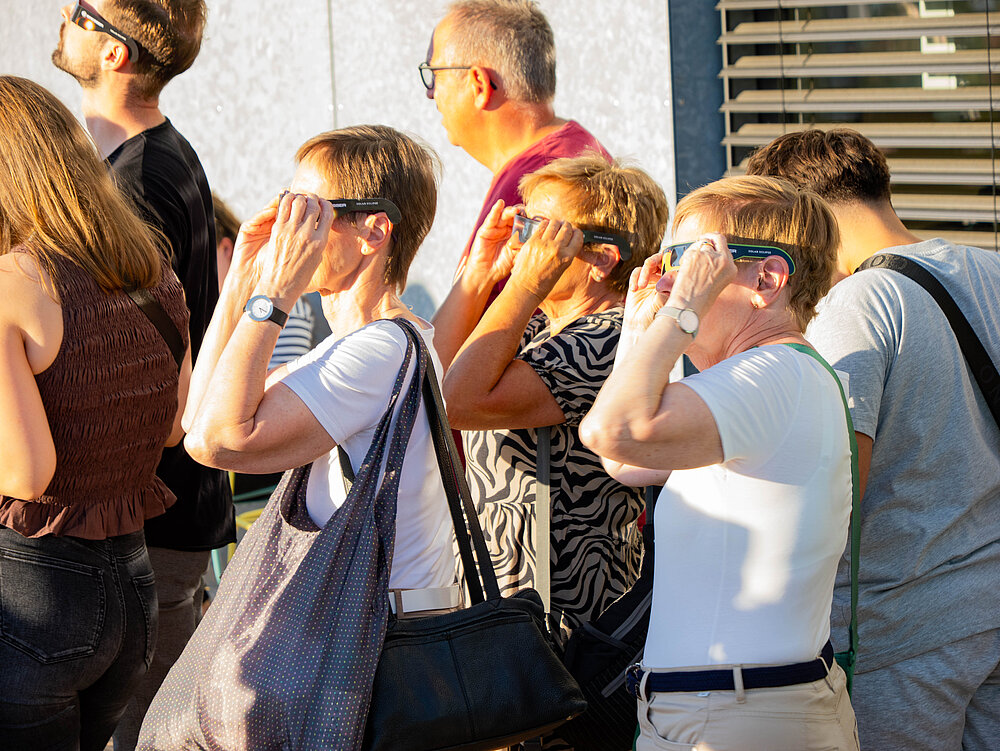
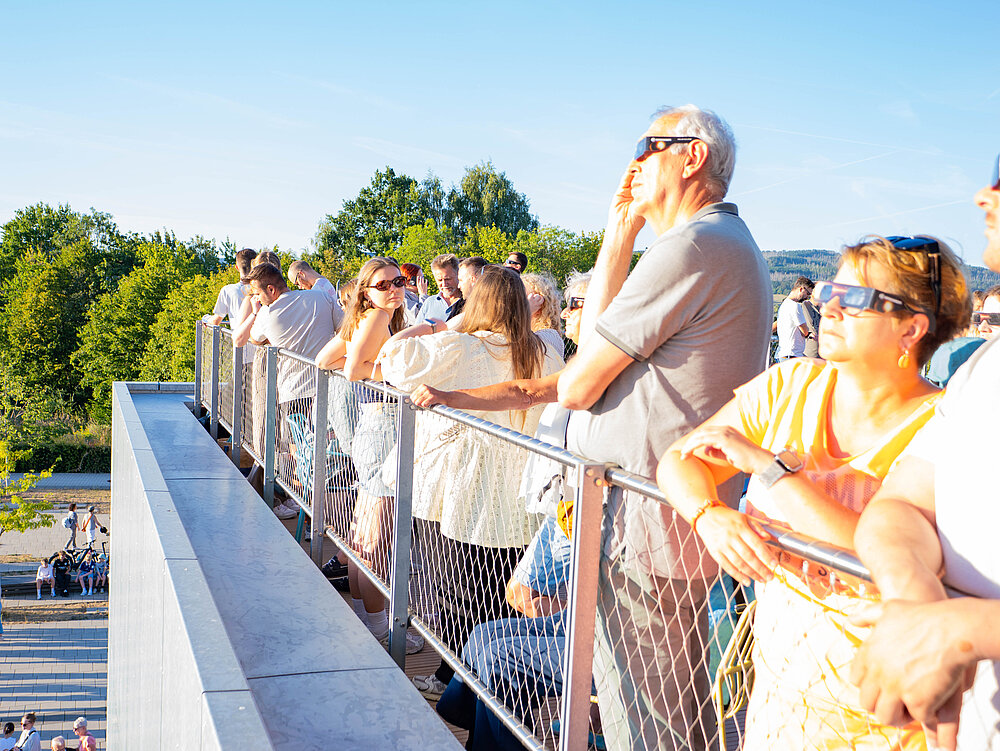
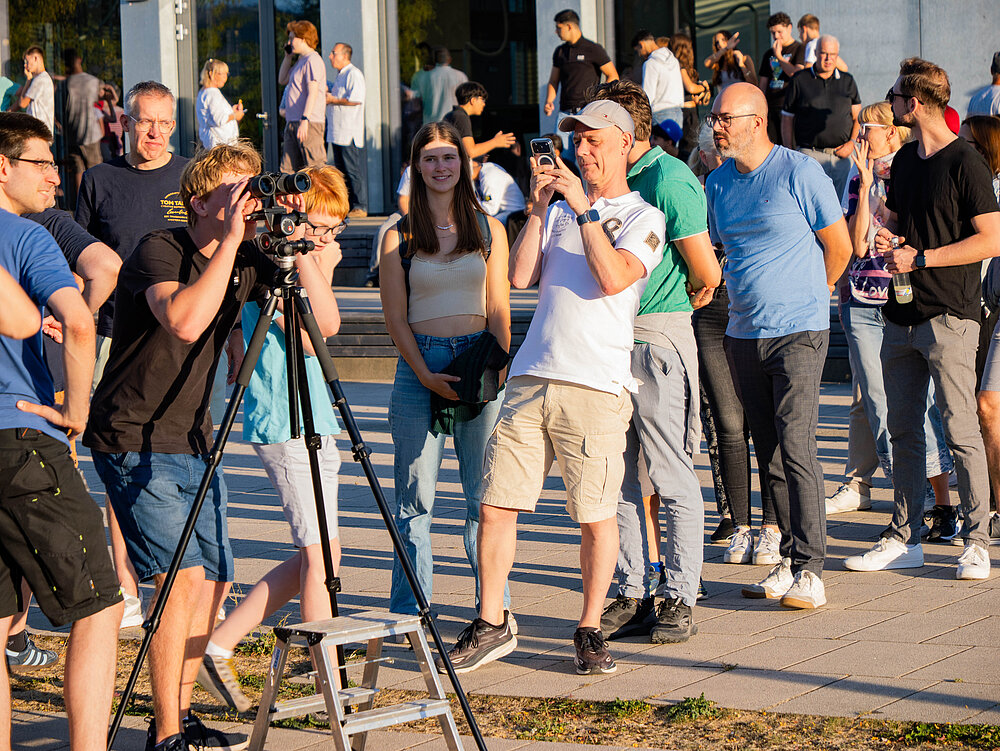
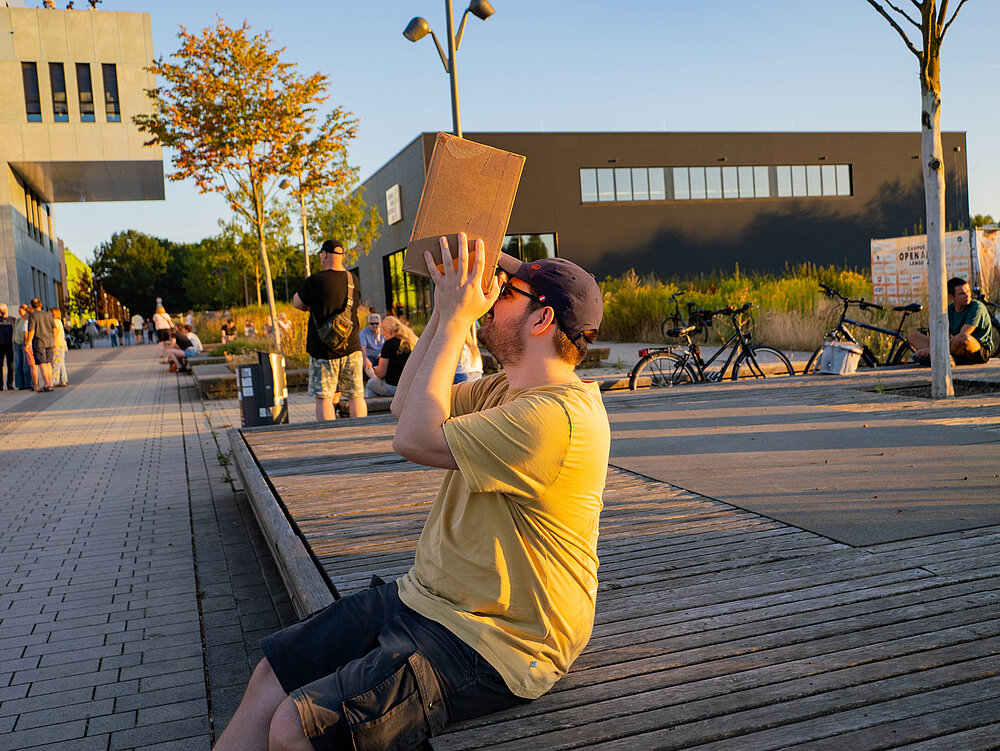
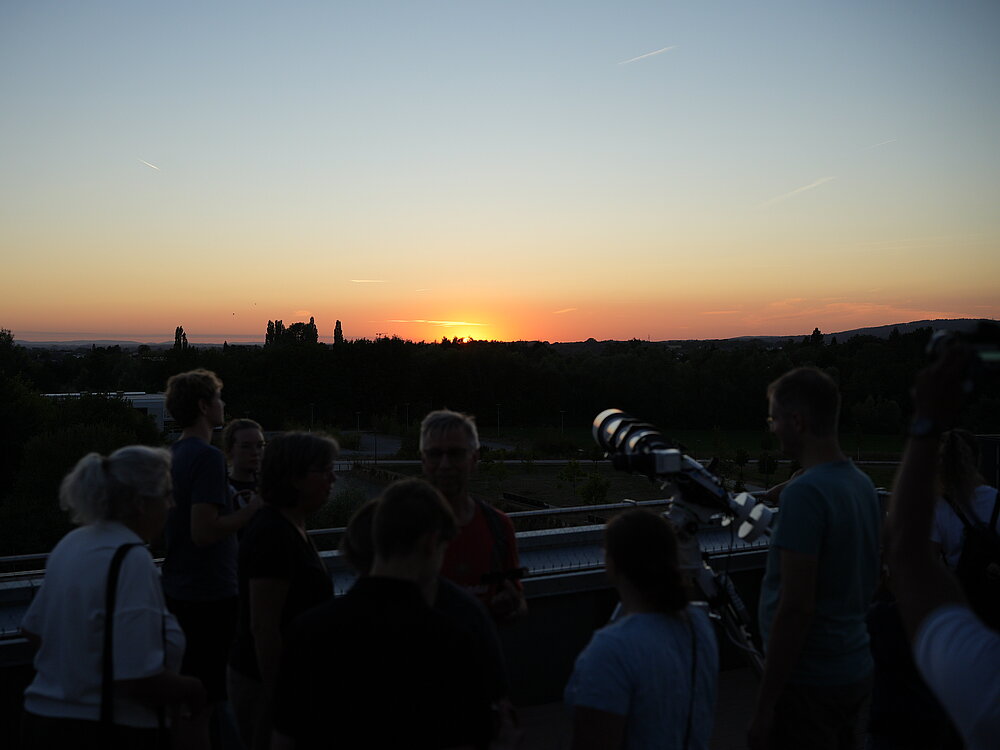
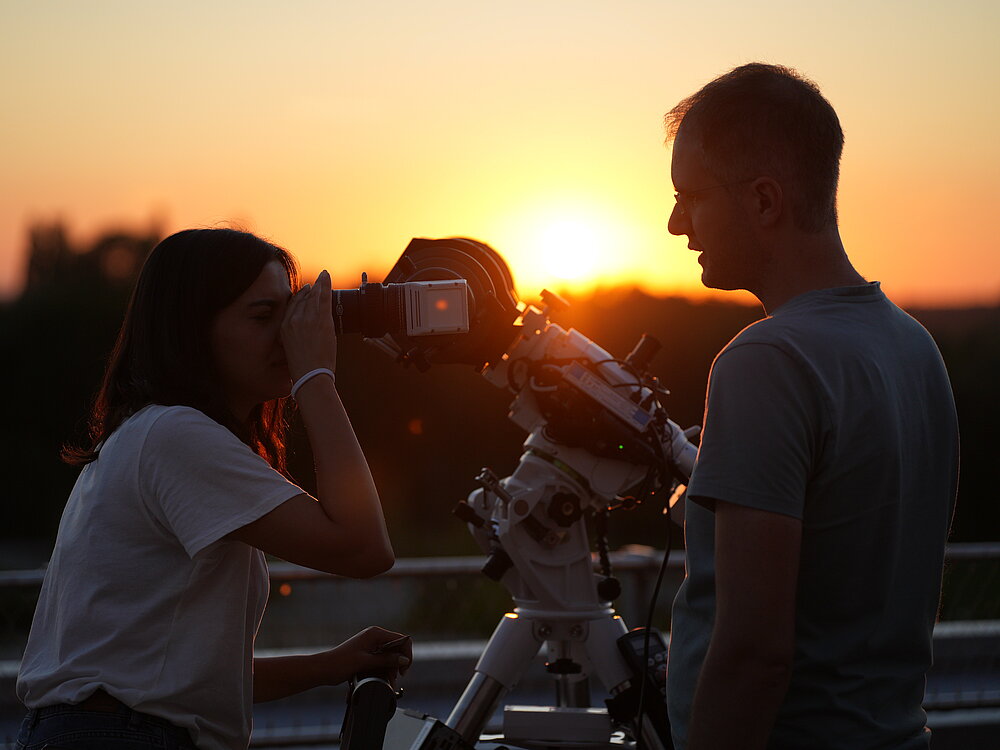
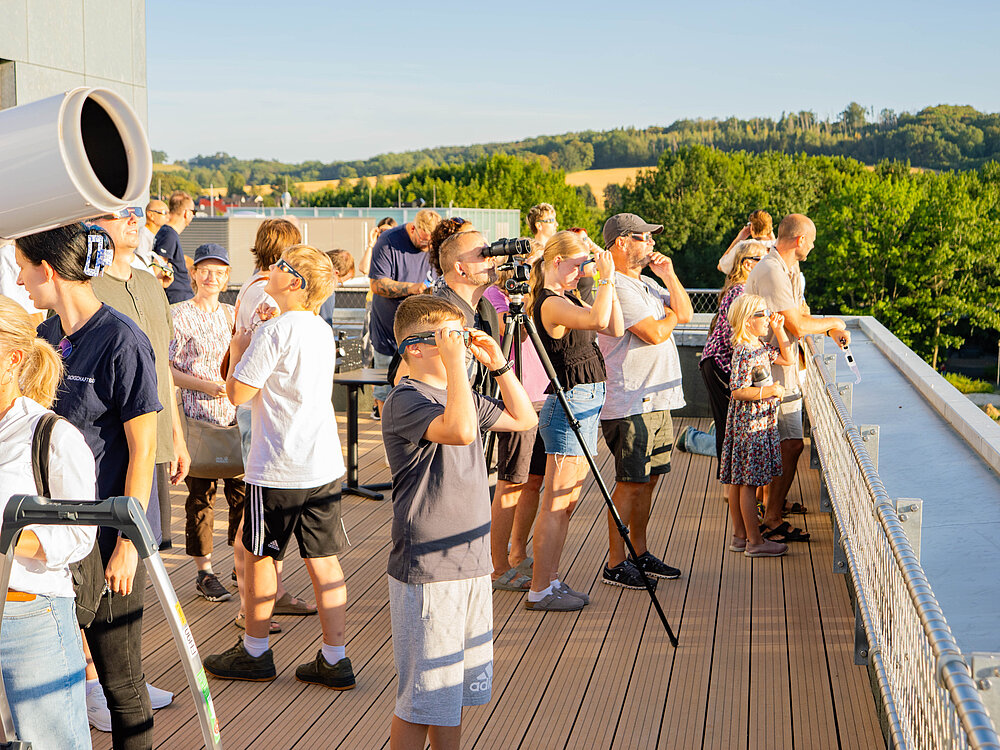
After the lecture, which lasted about an hour and a half, numerous guests took the opportunity to ask questions. The group then made its way from the university’s main building across campus to InnovationSPIN. From two balconies with an unobstructed view to the west, visitors were able to safely observe the eclipse using appropriate solar eclipse glasses. Those who wished could also take a look through a telescope. Solar binoculars were also set up on the campus lawn for the many guests.
“I found it especially exciting that we first learned why the eclipse occurs and were then able to observe it ourselves,” reported students as they marveled on the balcony.
The sunny weather worked in the observers’ favor. With an unobstructed view of the western horizon, guests were able to watch as the Moon gradually covered more and more of the Sun’s disk.
But the evening had even more to offer. Those who had paid close attention in class received a recommendation from Professor Üpping to find a spot outdoors that was as dark as possible later on. Even after the solar eclipse, everyone’s gaze therefore remained fixed on the night sky. The reason for this was the Perseids, one of the best-known annual meteor showers, which peaks in mid-August. During this time, Earth passes through the debris trail of Comet 109P/Swift-Tuttle. When the dust, rock, and ice particles enter Earth’s atmosphere, they burn up and become visible as glowing meteors—commonly known as shooting stars.
Under good viewing conditions, the constellations Perseus, Cassiopeia, and Andromeda were also visible in the same region of the sky; this is also where the Andromeda Galaxy is located, which can be seen as a faint, nebulous object under a dark sky.
The evening thus brought together several fascinating phenomena of our solar system and the night sky: First, the partial solar eclipse captured everyone’s attention; later, visitors were able to observe the starry sky and, with a little luck, meteors as well. For many, the event likely continued to leave a lasting impression long after it ended on campus—perhaps even inspiring them to take a look at the night sky on their own.
A university staff member who attended the event with her children was also thrilled: “I think I’ll look up again at home tonight. Now at least I know what to look for.”
Professor Üpping was delighted by the high level of interest. The event, he said, had made it clear just how great people’s curiosity is about astronomical topics and scientific concepts.
The TH OWL Observatory regularly offers public events and lectures on astronomical topics. Those interested can find the current schedule on the TH OWL website at www.th-owl.de/sternwarte as well as in the TH OWL event calendar.