Size aside, TH OWL and UNHAS share a few similarities in addition to their snappy acronyms. Both have multiple campuses and study sites, and even their main buildings bear a resemblance to one another.
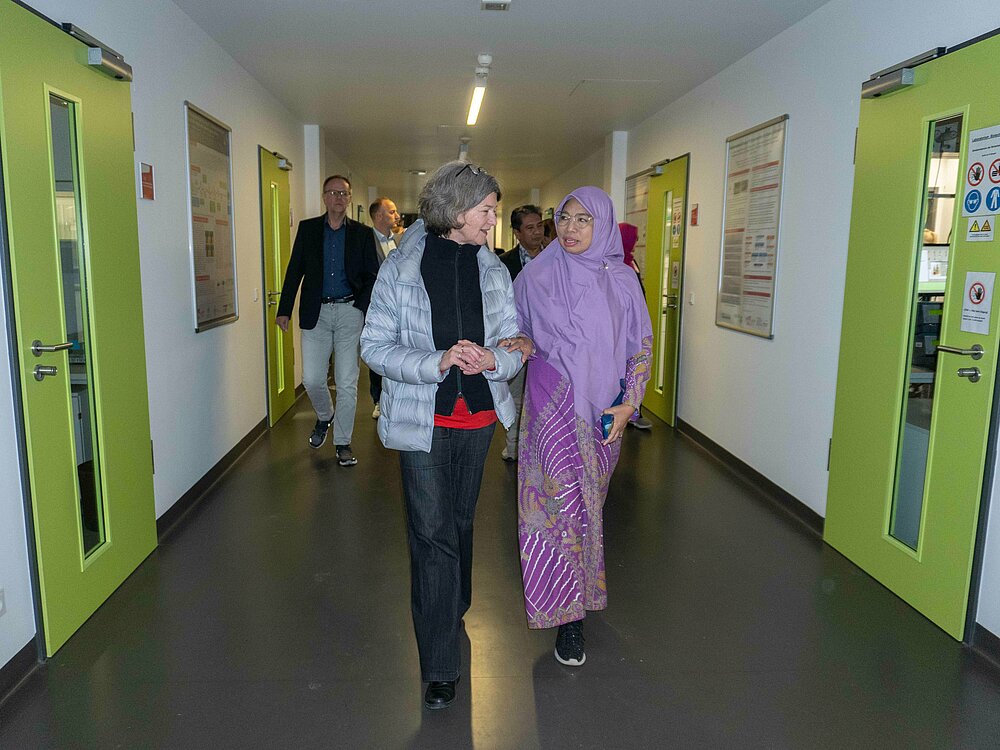
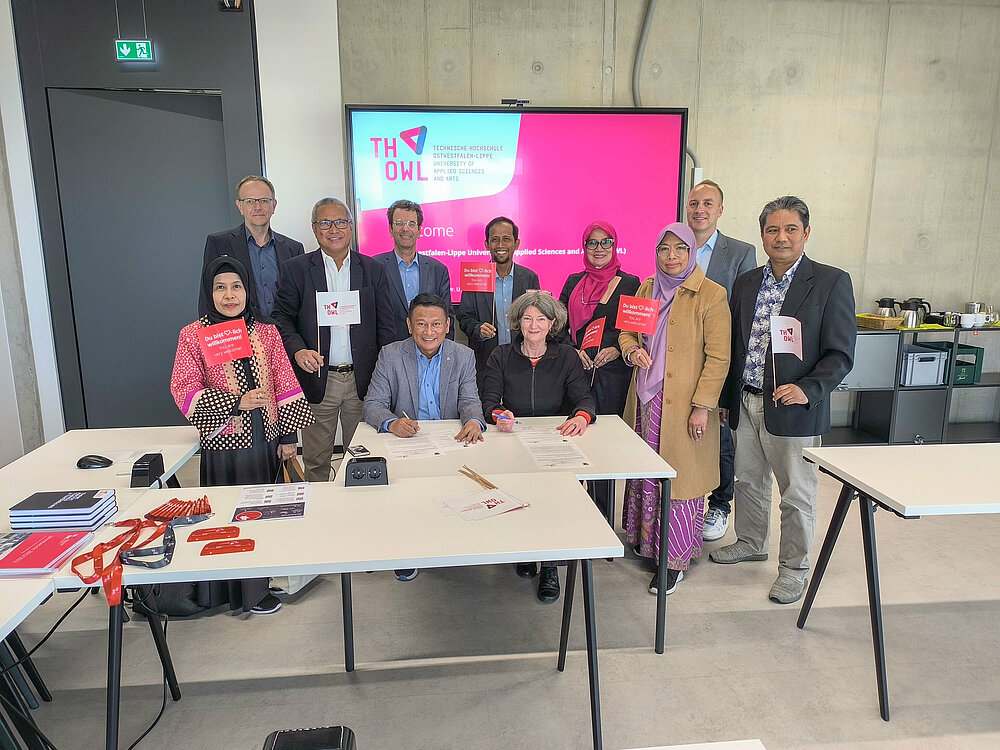
Professor Dr. Uta Pottgiesser, TH OWL Vice-President for Culture, Communication and Internationalization, warmly welcomed the seven-member delegation from the city of Makassar—located 11,850 kilometers away on the island of Sulawesi—to Lemgo. She had first become acquainted with the university during a business trip in February.
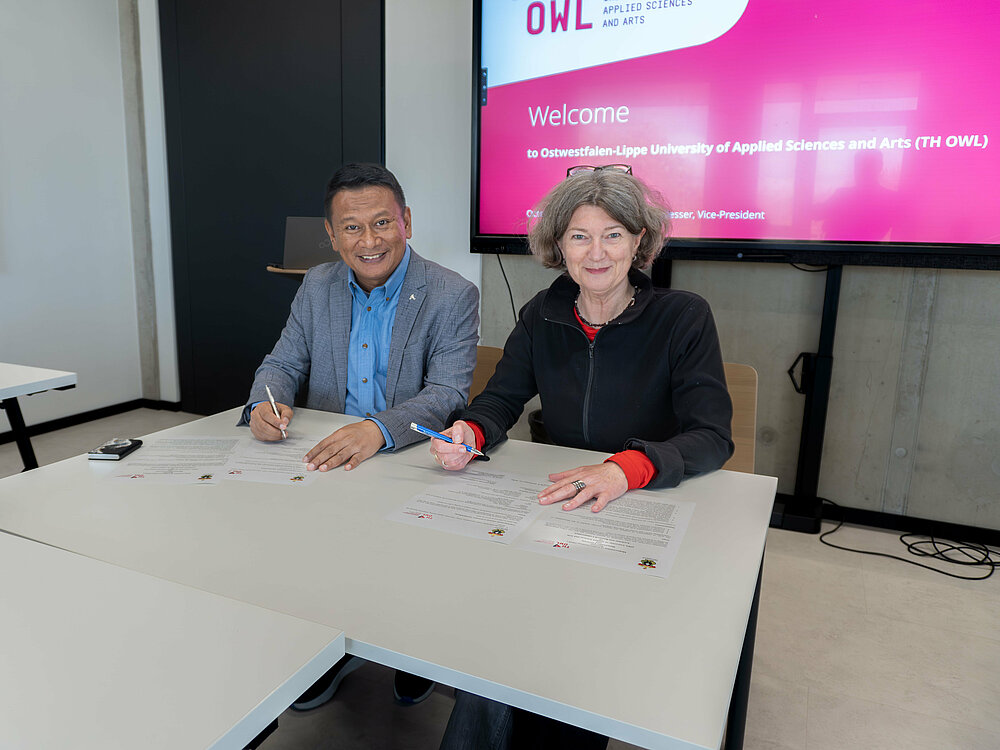
Together with Professor Adi Maulana, UNHAS Vice Rector for Cooperation, Entrepreneurship, Research, and Innovation, Professor Pottgiesser signed a Memorandum of Understanding (MOU). This agreement establishes the framework for specialization in cooperation between the two institutions.
“Hasanuddin University is an ideal partner for establishing a strategic partnership. Collaboration is possible in bachelor’s and master’s programs, in research, and in doctoral studies,” explained Professor Pottgiesser.
This agreement opens the door for both institutions to formulate common goals and further expand their academic collaboration. James O’Reilly, Head of the International Office at TH OWL, is also pleased about this.
The Indonesian delegation included Professor Dr. Adi Maulana, UNHAS Vice Rector for Cooperation, Entrepreneurship, Research, and Innovation; Professor Abdul Rahman Kadir, Dean of the Faculty of Economics and Business Administration; Professor Kartini and Dr. Andi Aswan, both lecturers at the Faculty of Economics and Business Administration; Professor Dr. Marianti A. Manggau, Dean of the Faculty of Pharmacy; Abdul Rahim, Vice Dean for Academic and Student Affairs at the Faculty of Pharmacy, and Professor Ariyanti Saleh, Dean of the Faculty of Nursing.
The TH-OWL Vice President presented the university, its visions, and strategies for international networking. A focus was placed on the English-language bachelor’s and master’s degree programs. These programs combine technical expertise with intercultural competencies and incorporate intensive language instruction.
This gives international students the opportunity to learn German and better integrate into academic and social life in Germany. “There is great interest in double-degree programs in the fields of engineering, Life Sciences, and business. Many Indonesian students would like to gain international experience in Germany and appreciate the practical training at TH OWL,” explained Professor Pottgiesser.
During this transcontinental visit, the Indonesian delegation presented a video about Hasanuddin University, one of Indonesia’s most renowned comprehensive universities with 17 faculties across six campus locations in Sulawesi.
“We are here to find ways to connect our students, staff, and researchers through exchange programs with TH OWL. We are particularly impressed by the strong link between science and practice that your university has established through close collaboration with industry,” emphasized Professor Adi Maulana.
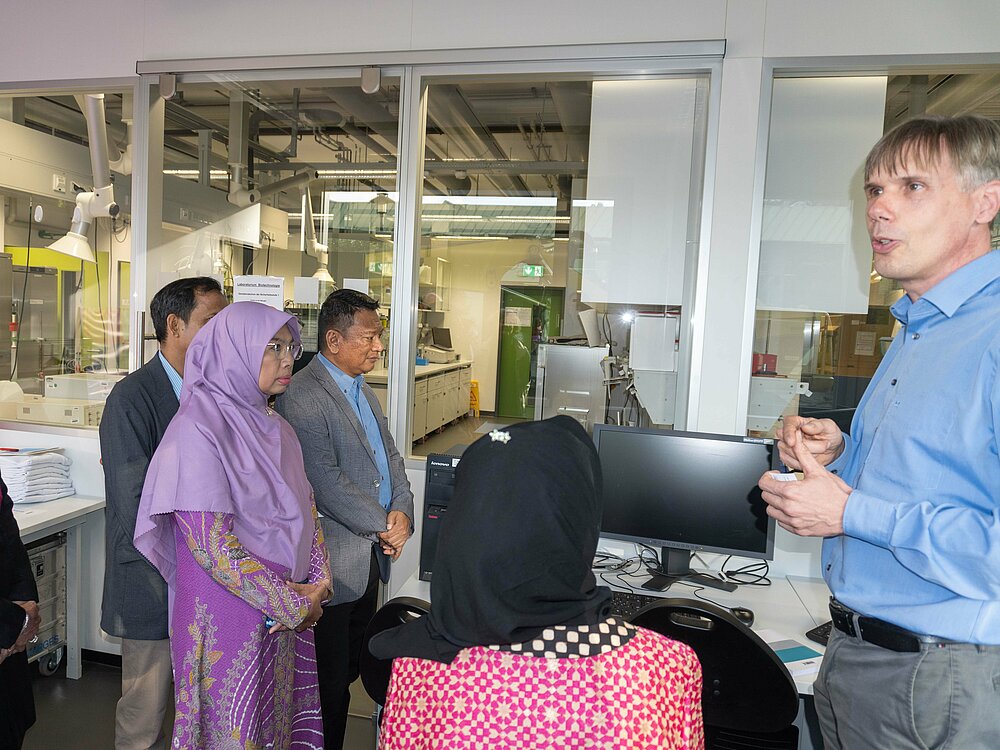
Accompanied by Dean Professor Dr. Thomas Gassenmeier, Associate Dean Professor Dr. Rainer Rasche, and Program Coordinator Pedro Rodrigues, the delegation also visited the new laboratory building of the Faculty of Life Science Technologies on the Innovation Campus Lemgo, where Professor Dr. Björn Frahm provided insights into current research projects. The guests also had the opportunity to explore the innovative facilities of the Future Food Factory OWL—an outstanding example of the university’s practice-oriented research.
The signed declaration reflects not only the desire to expand academic exchange but also the intention to engage in intensive cooperation in strategically relevant areas. The focus is particularly on promoting student exchange programs and research partnerships between the two universities.
For TH OWL, this collaboration represents another step forward in its internationalization strategy and a valuable opportunity to establish a presence in Southeast Asia. The university is committed to creating all necessary conditions to successfully implement the planned exchange for both students and academic staff.