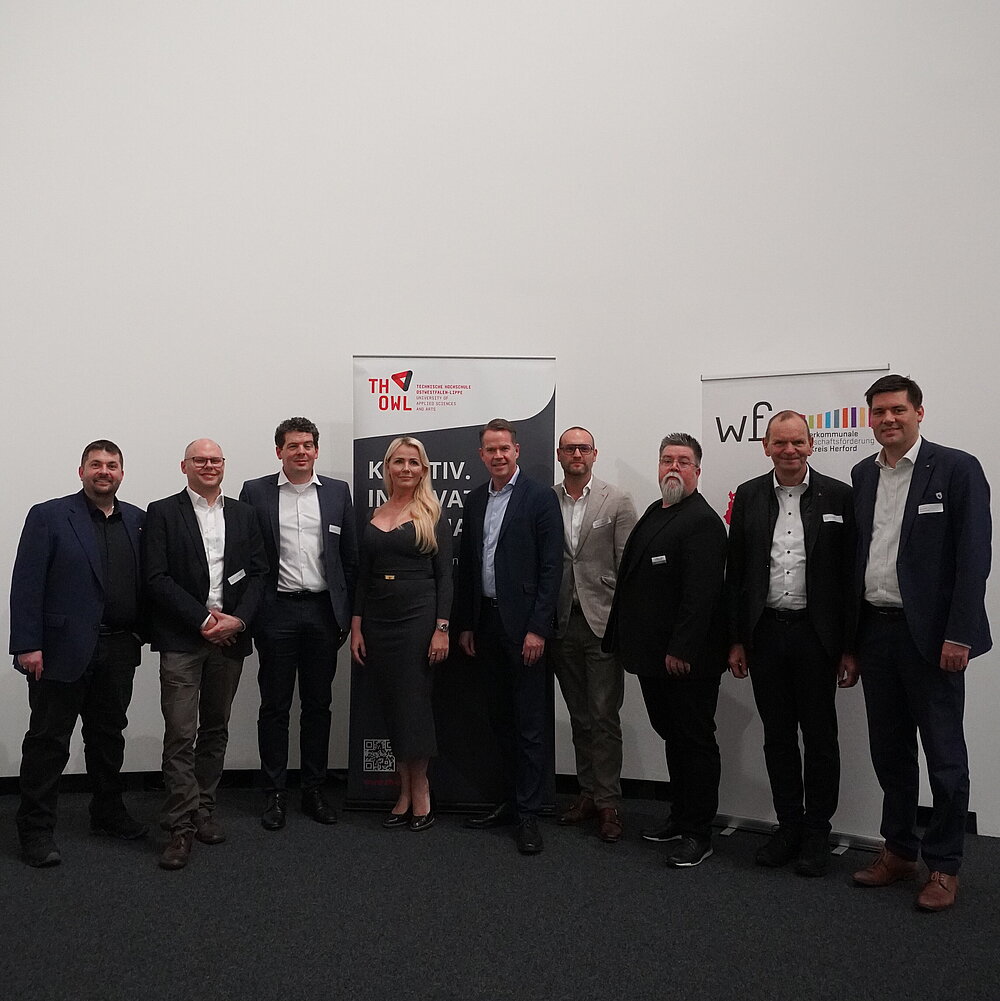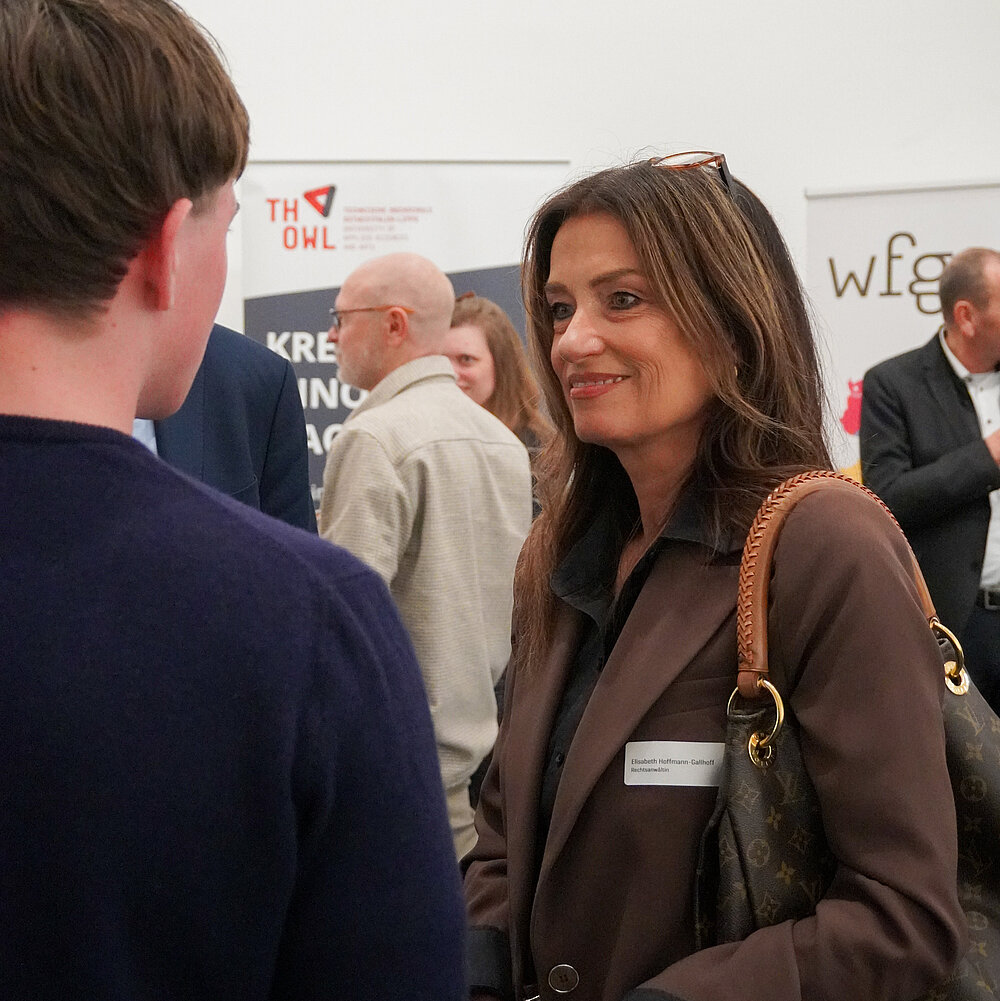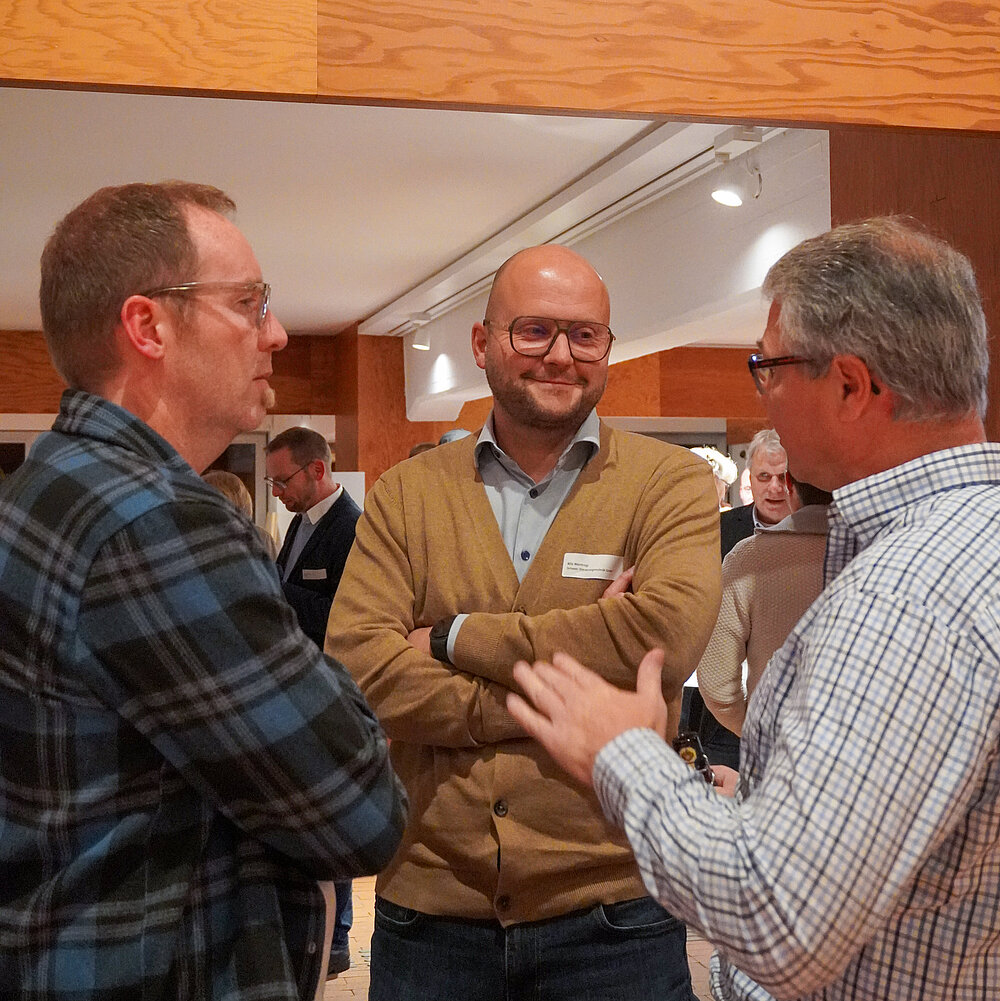
New technologies are transforming entire industries, business models, and work processes. For companies in the Herford district, too, the question is no longer whether this transformation is coming, but how they can successfully shape it. The role that collaboration with academia and research plays in this process was the focus of the “Business Meets Science” event held Monday evening at Marta Herford. At the invitation of the Intermunicipal Economic Development Agency of the Herford District (WFG) and the Ostwestfalen-Lippe University of Applied Sciences (TH OWL), approximately 200 representatives from business, academia, research, and politics gathered.
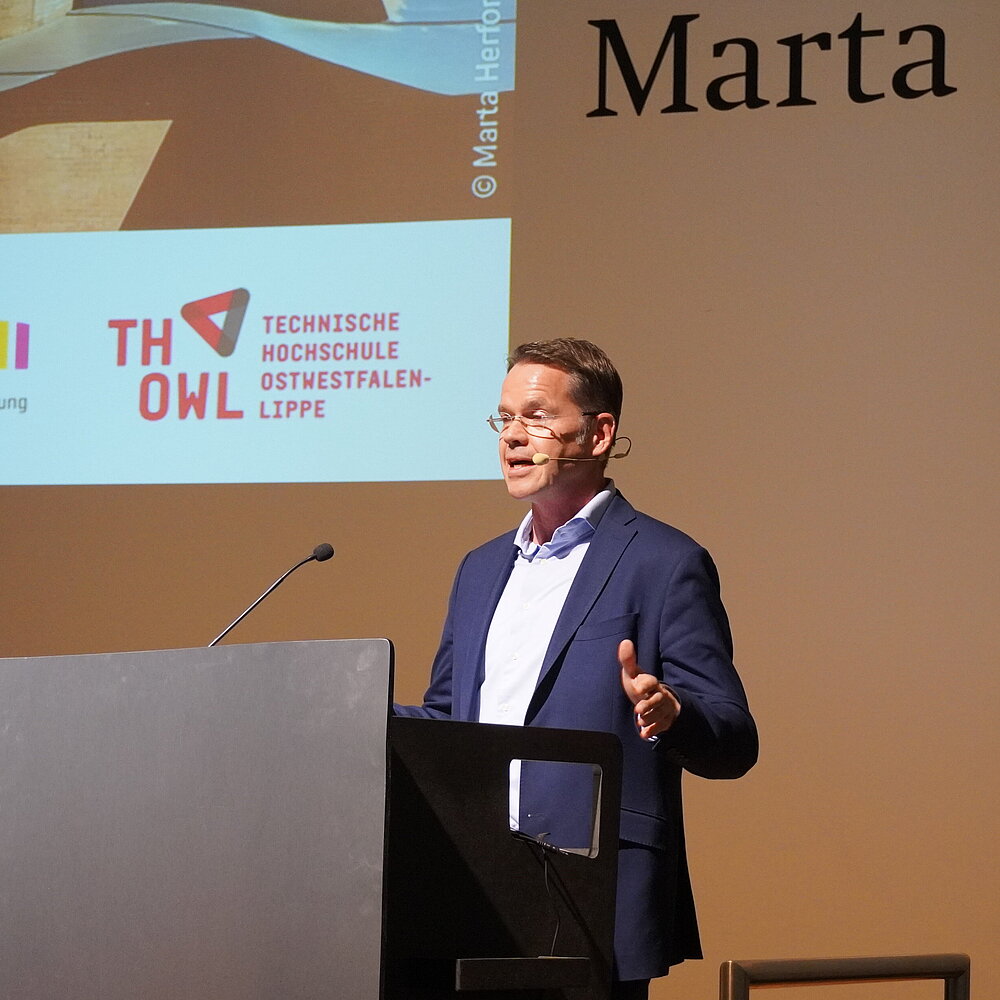
“New technologies alone do not guarantee additional value creation or jobs. To achieve this, business, academia, and the public sector must work together to create the right framework conditions. We do not want to comment on this transformation from the sidelines, but rather actively shape it,” explained Jan Hüttner, managing director of the economic development agency, at the opening.
TH OWL President Professor Dr. Jürgen Krahl also emphasized the importance of closer cooperation between universities and businesses: “Small and medium-sized enterprises, skilled trades, industry, and academia each bring different ways of working to the table. Successful collaboration therefore requires, above all, courage, perseverance, and a shared understanding of the challenges and solutions,” said the university president.
In his welcoming remarks, District Administrator Mirco Schmidt emphasized the importance of innovation and technology transfer for the future viability of the Herford District as a business location. The “Digital Management Solutions (DiMS)” degree program at the Herford Education Campus—developed jointly by Herford County, the City of Herford, and TH OWL—demonstrates that collaboration between academia, business, and the public sector can already be successfully achieved. It combines academic training with the needs of the regional economy.
Between Silicon Valley and Shenzhen: The future is also taking shape in East Westphalia-Lippe
Two keynote speeches then focused on the opportunities and challenges of technological change from an entrepreneurial perspective.
Under the title “You Can’t Apply for the Future,” entrepreneur, founder, and digital pioneer Oliver Flaskämper emphasized the importance of entrepreneurial courage, speed, and a willingness to experiment for successful innovation. He urged attendees to face new challenges without fear and not to always have “the big breakthrough” in mind: “It’s better to implement small changes step by step and just give it a try than to always wait for a miracle to happen.”
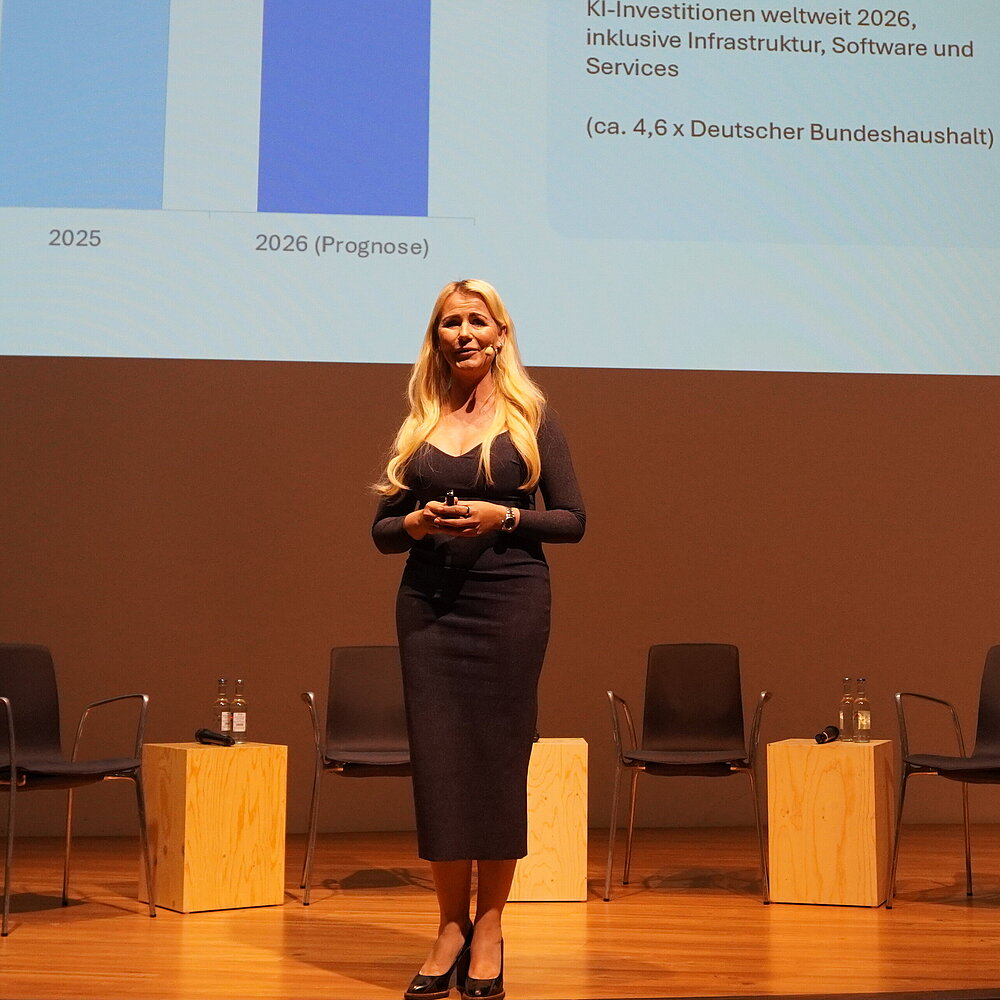
Tanja Maaß, entrepreneur, AI pioneer, and industrial strategist, explored the potential of artificial intelligence for industrial value creation. Her keynote, “East Westphalia Lies Between Silicon Valley and Shenzhen,” highlighted the opportunities that the use of new technologies presents, particularly for an industrially oriented region. “The opportunities lie not in competing with the big frontier models, but in specializing open-weight models and deploying them in such a way that, while they may not know everything, they can do the right things.”
When Research Meets Business Practice
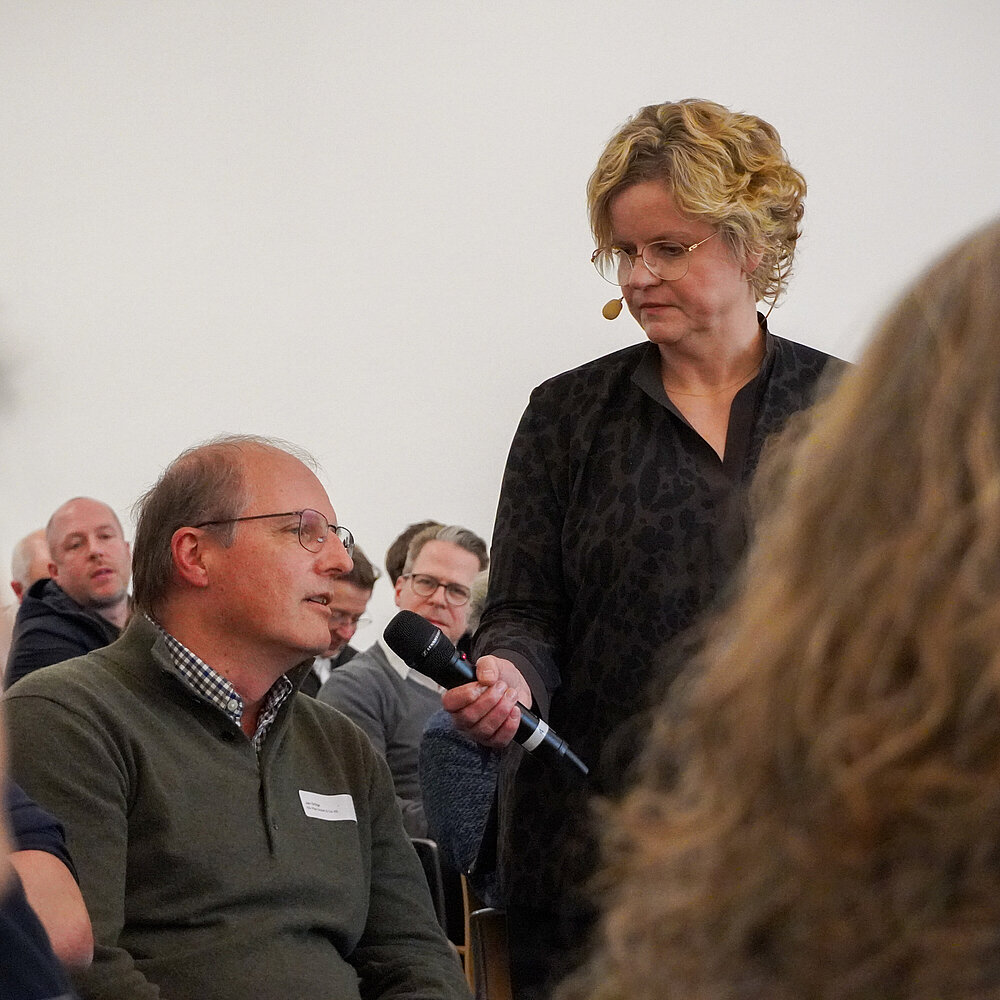
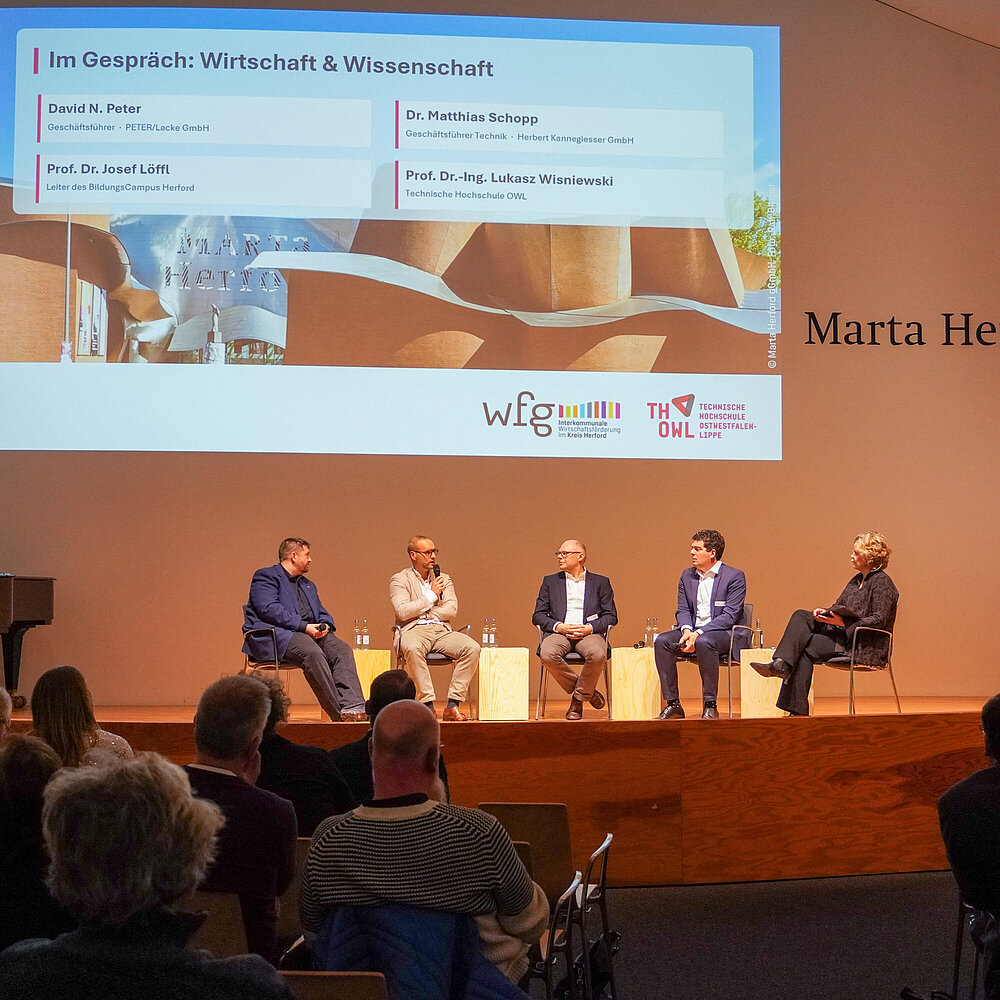
Professor Dr. Josef Löffl and Professor Dr. Lukasz Wisniewski from TH OWL then discussed with David N. Peter from PETER/LACKE and Dr. Matthias Schopp from the Kannegiesser Group how scientific findings can lead to concrete applications and successful collaborations. The discussion made it clear that successful innovation depends above all on the people who drive it forward. Whether in joint research projects or in the development of practice-oriented degree programs for the regional economy—what matters most is the willingness to collaborate, the courage to explore new paths, and the openness to consider other perspectives. Companies can contact the university at any time, emphasized Josef Löffl. “We’ll come to your company and sit down with you in confidence.” Journalist and moderator Brigitte Büscher led the discussion and the entire evening.
Encounters Should Lead to Lasting Collaborations
For the Economic Development Agency and TH OWL, the evening at Marta is part of a longer-term initiative. Back in July, both partners had already invited companies to an exchange event at the Innovation Campus in Lemgo. The series of events is intended to facilitate companies’ access to academic institutions and spark new forms of collaboration.
The goal goes beyond simply organizing individual events. The aim is to strengthen the connections between companies in the Herford district and universities, research institutions, and innovation networks throughout East Westphalia-Lippe, and to support the transfer of new technologies into business practice.
“We are in the midst of a profound technological—and, consequently, societal—transformation. As a region, we should jointly seize the resulting opportunities to shape our OWL region in a way that adds value and makes it a great place to live,” said Julia Wunderlich, Head of Technology Transfer at TH OWL, following the event.
For the organizers, one thing is clear: The evening at the Marta is not meant to be a conclusion, but rather another step toward closer, lasting collaboration between business and academia in the region.