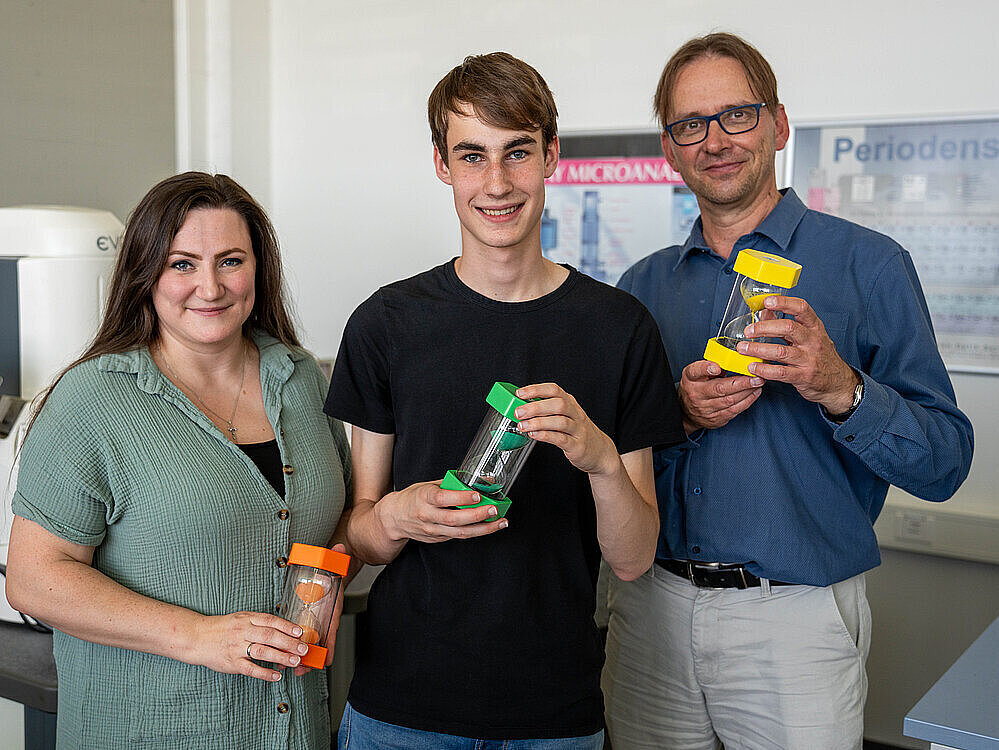
Tim Kammel is by no means an isolated case. For many years, the (TH) OWL University of Applied Sciences and Arts has been helping young people develop their ideas. Teachers and students can connect with researchers, laboratories, or workshops here when they’re looking for expertise for projects, research papers, or competition entries. Depending on the specific need, the faculties facilitate connections and work with the schools to develop customized solutions. Where technically and logistically feasible, researchers and staff contribute their expertise—not because it’s expected of them, but because they take pleasure in supporting young people on their journey.
Dr. Jens Schulze has seen firsthand for many years that this collaboration works. The math and physics teacher at Engelbert-Kaempfer-Gymnasium has been advising his school’s “Jugend forscht” club for 14 years—and in this role also mentored Tim Kammel. During this time, numerous student projects have benefited from the collaboration with TH OWL.
“Students shouldn’t just sit and mull over their projects. At TH OWL, they can discuss their ideas with experts and further develop them,” says Schulze. For some projects, students were also able to present their work to professors at the University and receive valuable feedback. “The competition juries notice when someone looks around, combines research with practical application, and incorporates new ideas into their work,” observes Schulze.
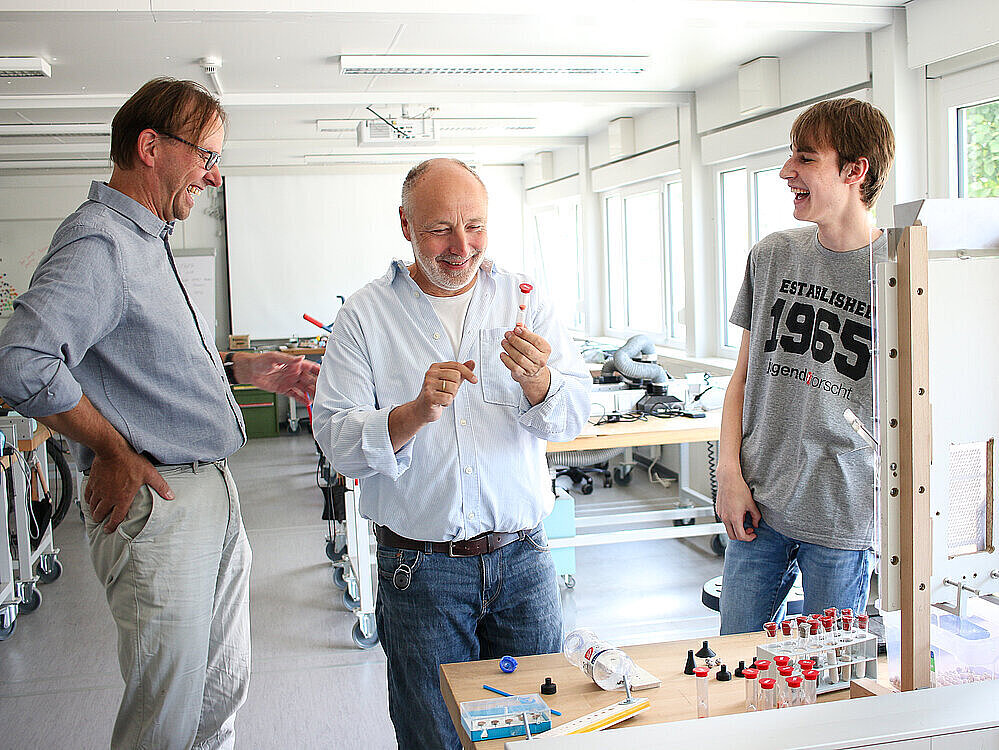
But how do teachers even find the right contacts for their projects? For many, the first stop is Rainer Kammler at the TechLipp Learning Lab. For more than 20 years, he has been bringing schools and TH OWL together. The lab offers hands-on activities for school classes and promotes collaboration with schools in the region. There, children and teenagers get hands-on: they screw, assemble, solder, experiment, and program. The goal is to spark an early interest in science and technology among young people and to provide insights into degree programs and research.
Depending on the topic, Kammler initially supervises projects himself and, if necessary, connects students with the appropriate sections, laboratories, or workshops at TH OWL. Together, they determine what kind of expertise can help a project move forward.
“I love it when children and teens begin to discover the world on their own, ask questions, and try things that we adults have long since forgotten,” says Kammler. It is precisely this curiosity that drives him to bring teachers and young people together with the right experts at the University.
Over the years, this has fostered close networks with schools. Rainer Kammler has a long-standing collaboration with Dr. Jens Schulze. “Mr. Schulze regularly shows up with new projects—and that’s exactly how it should be,” he says with a smile.
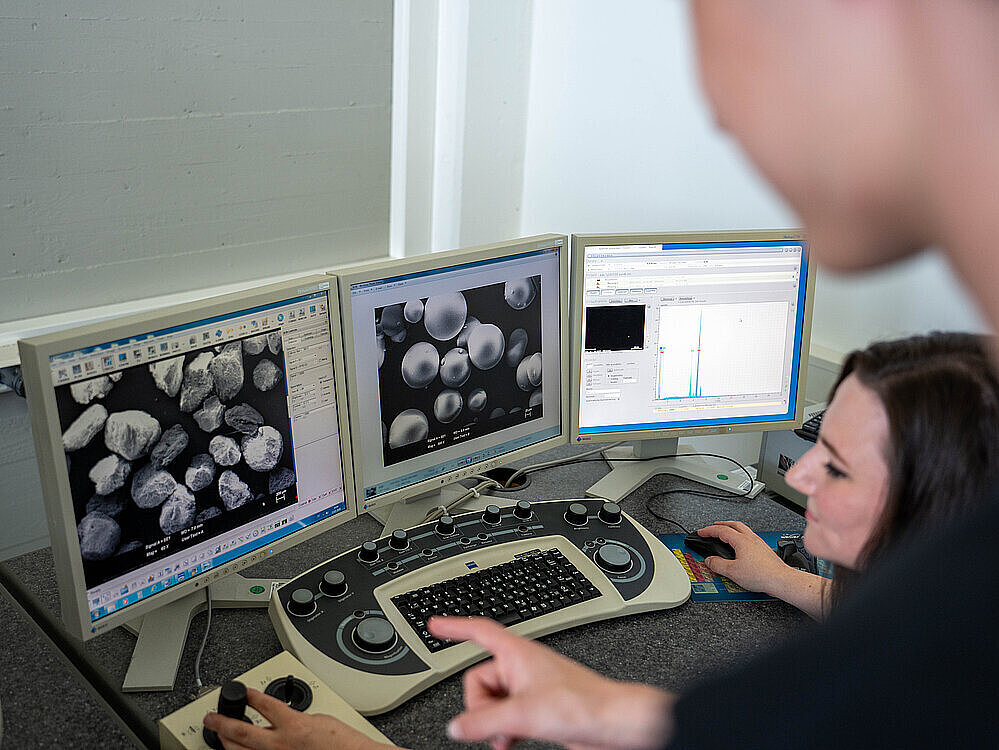
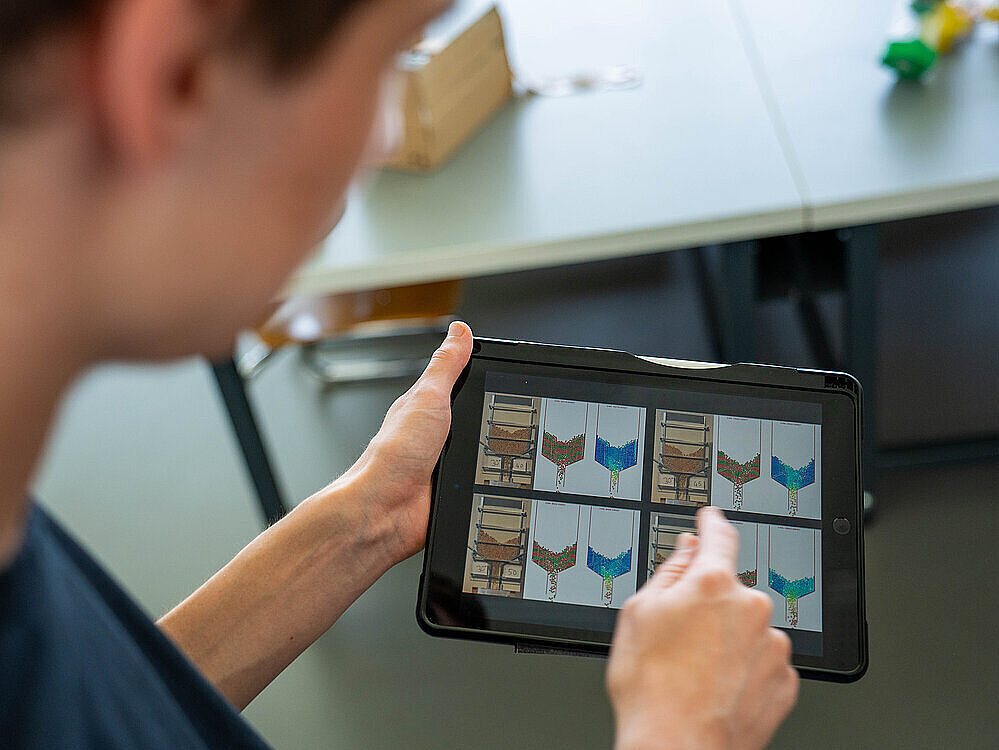
Tim Kammel, a “Jugend forscht” award winner, also benefited from the networks. Materials tester Juliane Boldt from the Faculty of Production and Engineering used a scanning electron microscope to produce detailed images of various grains of sand for his project, which Tim used to clearly illustrate the processes inside an hourglass.
“Tim was incredibly dedicated,” recalls Boldt. “His enthusiasm was contagious and made working with him a pleasure. We’re happy when we can support young people in taking a step forward within the scope of our capabilities.” For her, collaboration with schools is simply part of the job. “If we can’t help ourselves, there are so many resources and expertise here at the TH—we’ll find someone.”
Rainer Kammler from the TechLipp learning lab also knows, however, that such projects require time and dedication from all sides. This makes him appreciate teachers all the more—those who guide students over the years and encourage them to conduct independent research.
When school classes visit the campus, teachers sometimes run into alumni who are now studying at TH OWL themselves. For Kammler, this illustrates how initial contacts often develop into long-term connections. That’s why, for him, every inquiry is first and foremost an opportunity to spark young people’s enthusiasm for science and technology. He wants to encourage lecturers to reach out to TH OWL: “Don’t hesitate to contact us. We’re happy to help connect you with the right experts and work together to see how we can support you.”
For Tim Kammel, this path has paid off. After winning at the regional and state levels, he received the Federal Chancellor’s Award for the most original project at the national finals of “Jugend forscht.” On September 15, he will first present his project at the Federal Chancellery in Berlin. From September 22 to 27, he will compete with it at the European Young Scientists’ Competition (EUCYS) in Kiel.
The first step, however, began much earlier—with an idea, a dedicated teacher, and people at TH OWL who took the time to listen and share their expertise.
An idea for a research project?
Are you planning a research project, a term paper, or a competition entry with your students and need support? Feel free to contact us.
Contact:
Email: techlipp(at)th-owl.de
You can find us on the Innovation Campus Lemgo on the ground floor of Building C55 in Room 55.014.